Buy deutschkurse.eu ?
We are moving the project
deutschkurse.eu .
Are you interested in purchasing the domain
deutschkurse.eu ?
domain@kv-gmbh.de · 0541-91531010
Buy deutschkurse.eu ?
How do you calculate Zakat?
Zakat is calculated as 2.5% of a Muslim's total wealth that has been held for a full lunar year. This includes cash, gold, silver, investments, and any other assets that are considered part of one's wealth. Once the total amount of eligible wealth is determined, 2.5% of that amount is then given as Zakat to those in need. It is important for Muslims to calculate and pay Zakat annually as it is one of the Five Pillars of Islam and a means of purifying one's wealth. **
How do I pay Zakat?
To pay Zakat, you first need to calculate the value of your assets and determine if you meet the Nisab threshold. The Nisab is the minimum amount of wealth a person must have before they are obligated to pay Zakat. Once you have determined that you meet the Nisab threshold, you should calculate 2.5% of the total value of your assets and then distribute that amount to those in need. It is important to ensure that your Zakat is given to eligible recipients such as the poor, needy, and those in debt. You can distribute your Zakat directly to individuals in need or through reputable charitable organizations. **


Similar search terms for Zakat
Top-Angebote
Products related to Zakat:
-
United Radish Baby Learning Phone Toy With Music, Lights & Early Education Activities pinkWake up your little ones curiosity with a fun and interactive baby learning phone designed to inspire early development through play. This adorable radishshaped toy combines engaging sounds, music, and colorful buttons to keep toddlers entertained...39,97 $*Shipping: 0,00 $Secure redirect to the provider
-
Collins Easy Learning English Grammar And Punctuation 1 By Collins Education - Non Fiction - PaperbackTitle:. Collins Easy Learning English Grammar And Punctuation 1 Format: Paperback Overview:. The Collins Easy Learning English Grammar And Punctuation 1 delivers a focused, highly practical introduction to the foundational rules that govern effective written English. Published by Collins Education, this volume serves as the first entry in a widely respected instructional series designed to break down complex linguistic concepts into manageable, easy-to-follow lessons. Rather than presenting dense theoretical lectures, the book adopts a structured, activity-driven approach that guides readers through essential grammar topics, punctuation conventions, clause construction, and common syntactical patterns. Each chapter pairs clear explanations with targeted exercises that reinforce understanding through immediate application. The layout prioritises readability, using spacious margins, defined headings, and visual cues that make self-directed study straightforward. Whether you are preparing for formal assessments, rebuilding foundational literacy skills after years away from academia, or simply aiming to eliminate recurring errors in everyday documents, this guide provides a reliable pathway to clearer, more confident writing. By combining curriculum-aligned content with proven pedagogy, the book bridges the gap between passive reading and active mastery, ensuring that every lesson translates directly into improved communication habits outside the page. What Makes This Book Stand Out:. Unlike traditional grammar textbooks that overwhelm readers with exhaustive terminology and rigid formatting, this volume thrives on accessibility and progressive skill building. The standout feature is its deliberate pacing: each rule is introduced through a concise explanation, immediately followed by contextual examples that mirror real-world usage. Practice tasks are embedded throughout rather than quarantined at the end, allowing readers to test comprehension in the moment and receive structured feedback loops. The editorial design intentionally avoids decorative clutter, keeping attention fixed on syntax, punctuation marks, sentence boundaries, and error correction strategies. Every chapter concludes with review checkpoints that help learners identify weak spots before advancing, creating a cumulative mastery model instead of fragmented studying. The paperback format remains deliberately compact without sacrificing depth, striking a balance between portability and comprehensive coverage. This combination of cognitive scaffolding, clear typographic hierarchy, and purposeful exercise sequencing transforms what could easily feel mechanical into an engaging, results-oriented study tool. It respects the reader’s time, acknowledges typical stumbling blocks, and replaces confusion with repeatable frameworks that stick. Who This Book Is Perfect For:. This resource is ideally suited for secondary school students navigating National Curriculum expectations, particularly...7,99 £*Shipping: 2,99 £Secure redirect to the provider
-
Spelling and Vocabulary practice activities for children ages 6-7 (Year 2). Perfect for Home Learning.: (Scholastic English Skills)Master spelling and vocabulary and build English skills This workbook supports children to develop their spelling and vocabulary skills through fun and engaging activities which will help motivate your child's learning and confidence. A progress chart is also included for children to colour in as chapters are completed, and an introduction chapter on how to use the book. Content is split into: Back to basics; New spellins work: consonants; Focus on vowel sound; Super suffixes; More suffixes; Homophones and tricky words; and Spelling words with apostrophes. Help children feel prepared, capable and ready to tackle new challenges at school. Use at home or in school. Quickly builds confidence through regular, achievable activities that encourage independent learning. Designed to complement the school curriculum, meaning children work at the right level, so nothing feels too hard or too easy. Includes extra notes and tips to reinforce skills.4,99 £*Shipping: 1,99 £Secure redirect to the provider
-
JoyToys Portable Kids Piano Toy Mini Electronic Keyboard For Montessori Music Learning & Early Education pinkUnleash your child's love for music with this Mini electronic keyboard designed for curious little hands. This compact musical toy encourages creativity, rhythm, and early learning while providing hours of engaging fun. Perfect for toddlers and...59,97 $*Shipping: 0,00 $Secure redirect to the provider


-
What is the question about Zakat?
The question about Zakat is typically about the Islamic practice of giving a portion of one's wealth to those in need. It may involve the calculation of the amount to be given, the recipients of Zakat, and the conditions under which Zakat is obligatory. Additionally, the question may also explore the spiritual and social significance of Zakat in Islam. **
-
When and to whom is Zakat paid?
Zakat is paid annually by Muslims who meet the necessary criteria, which includes owning a minimum amount of wealth known as Nisab. It is typically given to those in need, such as the poor, needy, orphans, and widows, as a way of purifying one's wealth and helping those less fortunate. Zakat is one of the Five Pillars of Islam and is considered a religious obligation for those who are able to pay it. **
-
What does Zakat refer to in Islam?
Zakat refers to the mandatory giving of a portion of one's wealth to those in need, as prescribed in Islam. It is one of the Five Pillars of Islam and is considered a form of worship and purification of one's wealth. The amount to be given is typically 2.5% of a person's savings and assets, and it is meant to support the less fortunate and promote social justice within the Muslim community. Zakat is seen as a way to fulfill one's duty to help those in need and to promote economic equality. **
-
When do I have to pay Zakat?
You are required to pay Zakat if you have a certain amount of wealth (Nisab) that has been in your possession for a full lunar year. The Nisab is the minimum amount of wealth that makes a person eligible to pay Zakat. Once you have reached the Nisab threshold and have had the wealth in your possession for a full lunar year, you are obligated to pay Zakat on that wealth. It is important to calculate and pay Zakat on an annual basis to fulfill this important pillar of Islam. **
Can you deduct Zakat from your taxes?
In some countries, it is possible to deduct Zakat from your taxes if the government recognizes Zakat as a deductible charitable contribution. However, this varies by country and it is important to consult with a tax professional or local tax authority to understand the specific rules and regulations regarding Zakat deductions. Additionally, it is important to ensure that the Zakat payment meets the criteria for charitable deductions as outlined by the tax laws in your country. **
How does Zakat work for street animals?
Zakat can be used to help street animals by providing funds for their food, shelter, and medical care. Individuals can donate their Zakat to organizations or individuals who work to rescue, rehabilitate, and care for street animals. This can help improve the well-being of these animals and ensure they receive the necessary support for survival. By allocating Zakat towards street animals, individuals can fulfill their religious obligation while also making a positive impact on the lives of these vulnerable creatures. **
Top-Angebote
Products related to Zakat:
-
Articulate for Kids, Board Game for Children Aged 6 and Older, Educational Vocabulary Development and Language SkillsArticulate for Kids is a board game designed to provide younger children with fun and educational entertainment. It's suitable for children aged 6 and older, making it a great introduction to the original Articulate game. The game was compiled by an educational specialist and includes over 2000 entries in six categories, promoting vocabulary development and language skills in children. Players will have opportunities to describe and guess words and phrases in these categories, enhancing their communication abilities. The game comes with its own board, making it a complete and standalone game that can be played on its own.23,99 £*Shipping: 3,95 £Secure redirect to the provider
-
Learning Resources Scramboozle Educational Game for Kids - Ages 6+ - Encourages Critical Thinking and Boosts Vocabulary SkillsIntroduce your little ones to the exciting world of learning with the Learning Resources Scramboozle Educational Game for Kids. This engaging game is designed to make learning fun while enhancing essential skills such as critical thinking, vocabulary, and teamwork. With its colorful cards and playful design, Scramboozle stimulates imagination and encourages interactive play. Perfect for family game nights or friendly competitions, Scramboozle invites children to decode silly words and race against the clock. It’s a delightful game that can be enjoyed by children aged 6 and up. Whether it's a gift for a birthday or a classroom resource, Scramboozle makes learning an enjoyable experience. It encourages critical thinking and boosts vocabulary skills with its colorful and engaging design.8,99 £*Shipping: 3,95 £Secure redirect to the provider
-
United Radish Baby Learning Phone Toy With Music, Lights & Early Education Activities pinkWake up your little ones curiosity with a fun and interactive baby learning phone designed to inspire early development through play. This adorable radishshaped toy combines engaging sounds, music, and colorful buttons to keep toddlers entertained...39,97 $*Shipping: 0,00 $Secure redirect to the provider
-
Collins Easy Learning English Grammar And Punctuation 1 By Collins Education - Non Fiction - PaperbackTitle:. Collins Easy Learning English Grammar And Punctuation 1 Format: Paperback Overview:. The Collins Easy Learning English Grammar And Punctuation 1 delivers a focused, highly practical introduction to the foundational rules that govern effective written English. Published by Collins Education, this volume serves as the first entry in a widely respected instructional series designed to break down complex linguistic concepts into manageable, easy-to-follow lessons. Rather than presenting dense theoretical lectures, the book adopts a structured, activity-driven approach that guides readers through essential grammar topics, punctuation conventions, clause construction, and common syntactical patterns. Each chapter pairs clear explanations with targeted exercises that reinforce understanding through immediate application. The layout prioritises readability, using spacious margins, defined headings, and visual cues that make self-directed study straightforward. Whether you are preparing for formal assessments, rebuilding foundational literacy skills after years away from academia, or simply aiming to eliminate recurring errors in everyday documents, this guide provides a reliable pathway to clearer, more confident writing. By combining curriculum-aligned content with proven pedagogy, the book bridges the gap between passive reading and active mastery, ensuring that every lesson translates directly into improved communication habits outside the page. What Makes This Book Stand Out:. Unlike traditional grammar textbooks that overwhelm readers with exhaustive terminology and rigid formatting, this volume thrives on accessibility and progressive skill building. The standout feature is its deliberate pacing: each rule is introduced through a concise explanation, immediately followed by contextual examples that mirror real-world usage. Practice tasks are embedded throughout rather than quarantined at the end, allowing readers to test comprehension in the moment and receive structured feedback loops. The editorial design intentionally avoids decorative clutter, keeping attention fixed on syntax, punctuation marks, sentence boundaries, and error correction strategies. Every chapter concludes with review checkpoints that help learners identify weak spots before advancing, creating a cumulative mastery model instead of fragmented studying. The paperback format remains deliberately compact without sacrificing depth, striking a balance between portability and comprehensive coverage. This combination of cognitive scaffolding, clear typographic hierarchy, and purposeful exercise sequencing transforms what could easily feel mechanical into an engaging, results-oriented study tool. It respects the reader’s time, acknowledges typical stumbling blocks, and replaces confusion with repeatable frameworks that stick. Who This Book Is Perfect For:. This resource is ideally suited for secondary school students navigating National Curriculum expectations, particularly...7,99 £*Shipping: 2,99 £Secure redirect to the provider
-
How do you calculate Zakat?
Zakat is calculated as 2.5% of a Muslim's total wealth that has been held for a full lunar year. This includes cash, gold, silver, investments, and any other assets that are considered part of one's wealth. Once the total amount of eligible wealth is determined, 2.5% of that amount is then given as Zakat to those in need. It is important for Muslims to calculate and pay Zakat annually as it is one of the Five Pillars of Islam and a means of purifying one's wealth. **
-
How do I pay Zakat?
To pay Zakat, you first need to calculate the value of your assets and determine if you meet the Nisab threshold. The Nisab is the minimum amount of wealth a person must have before they are obligated to pay Zakat. Once you have determined that you meet the Nisab threshold, you should calculate 2.5% of the total value of your assets and then distribute that amount to those in need. It is important to ensure that your Zakat is given to eligible recipients such as the poor, needy, and those in debt. You can distribute your Zakat directly to individuals in need or through reputable charitable organizations. **
-
What is the question about Zakat?
The question about Zakat is typically about the Islamic practice of giving a portion of one's wealth to those in need. It may involve the calculation of the amount to be given, the recipients of Zakat, and the conditions under which Zakat is obligatory. Additionally, the question may also explore the spiritual and social significance of Zakat in Islam. **
-
When and to whom is Zakat paid?
Zakat is paid annually by Muslims who meet the necessary criteria, which includes owning a minimum amount of wealth known as Nisab. It is typically given to those in need, such as the poor, needy, orphans, and widows, as a way of purifying one's wealth and helping those less fortunate. Zakat is one of the Five Pillars of Islam and is considered a religious obligation for those who are able to pay it. **
Similar search terms for Zakat
-
Spelling and Vocabulary practice activities for children ages 6-7 (Year 2). Perfect for Home Learning.: (Scholastic English Skills)Master spelling and vocabulary and build English skills This workbook supports children to develop their spelling and vocabulary skills through fun and engaging activities which will help motivate your child's learning and confidence. A progress chart is also included for children to colour in as chapters are completed, and an introduction chapter on how to use the book. Content is split into: Back to basics; New spellins work: consonants; Focus on vowel sound; Super suffixes; More suffixes; Homophones and tricky words; and Spelling words with apostrophes. Help children feel prepared, capable and ready to tackle new challenges at school. Use at home or in school. Quickly builds confidence through regular, achievable activities that encourage independent learning. Designed to complement the school curriculum, meaning children work at the right level, so nothing feels too hard or too easy. Includes extra notes and tips to reinforce skills.4,99 £*Shipping: 1,99 £Secure redirect to the provider
-
JoyToys Portable Kids Piano Toy Mini Electronic Keyboard For Montessori Music Learning & Early Education pinkUnleash your child's love for music with this Mini electronic keyboard designed for curious little hands. This compact musical toy encourages creativity, rhythm, and early learning while providing hours of engaging fun. Perfect for toddlers and...59,97 $*Shipping: 0,00 $Secure redirect to the provider
-
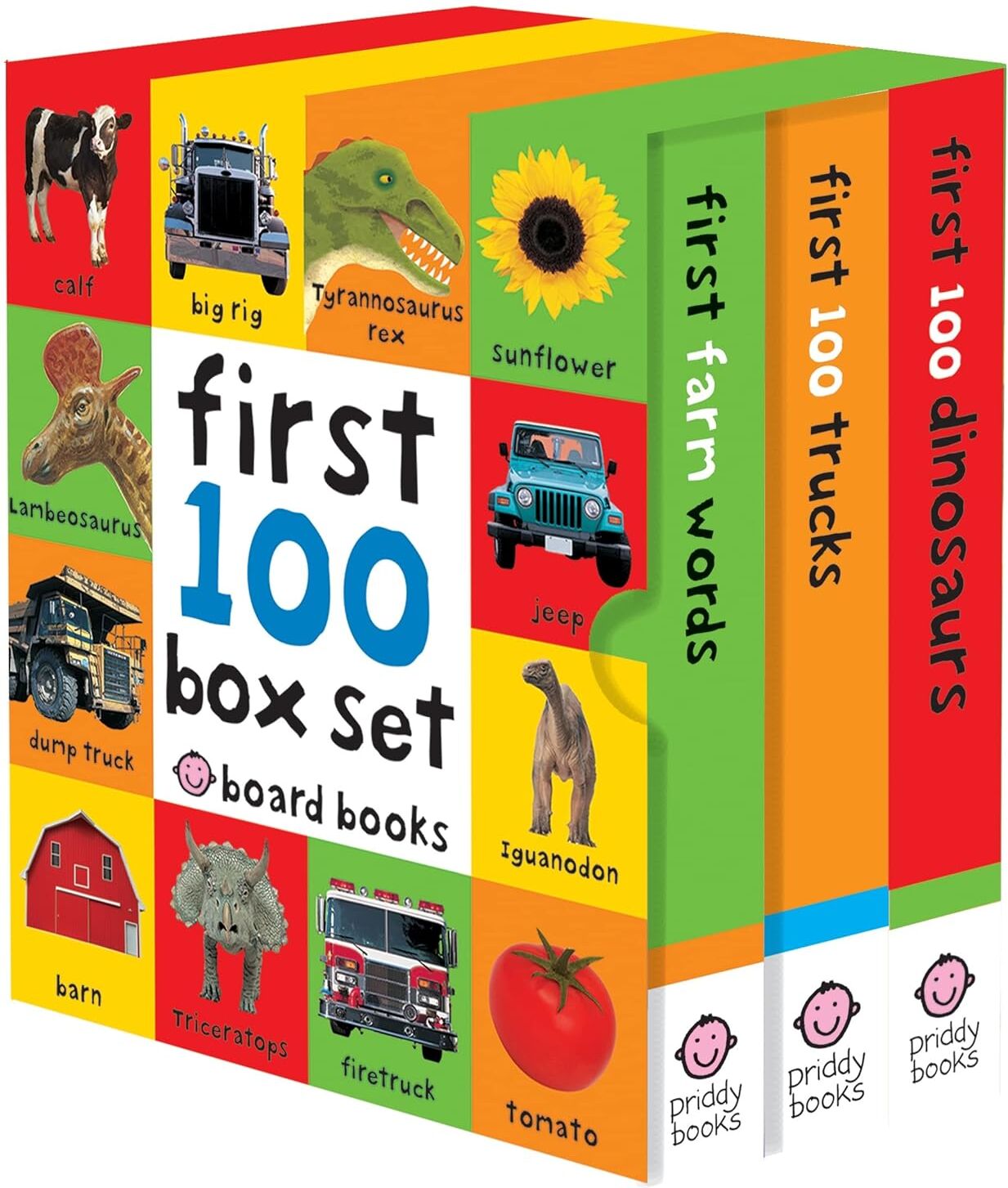
Priddy Books First 100 Box Set: Farm, Dino, Trucks by Roger Priddy - Board Book Set - Ages 0-5 - Early Learning Vocabulary BooksThe First 100 Box Set brings together three of Roger Priddy's bestselling early-learning titles in one sturdy slipcase. Featuring Farm, Dinosaurs, and Trucks, each board book uses bright photographic images and simple labelled words to build vocabulary. This compact and hard-wearing collection is ideal for little hands and makes a wonderful first library or gift set for any nursery shelf. Roger Priddy's First 100 series has become a firm favourite with parents and early-years educators thanks to its simple, effective approach to early word learning. Each of the three board books introduces 100 words through clear, vibrant photographs paired with bold, easy-to-read text. This set includes First Farm Words, First 100 Trucks, and First 100 Dinosaurs, all published by Priddy Books and suitable for children aged 0-5.8,49 £*Shipping: 2,99 £Secure redirect to the provider
-
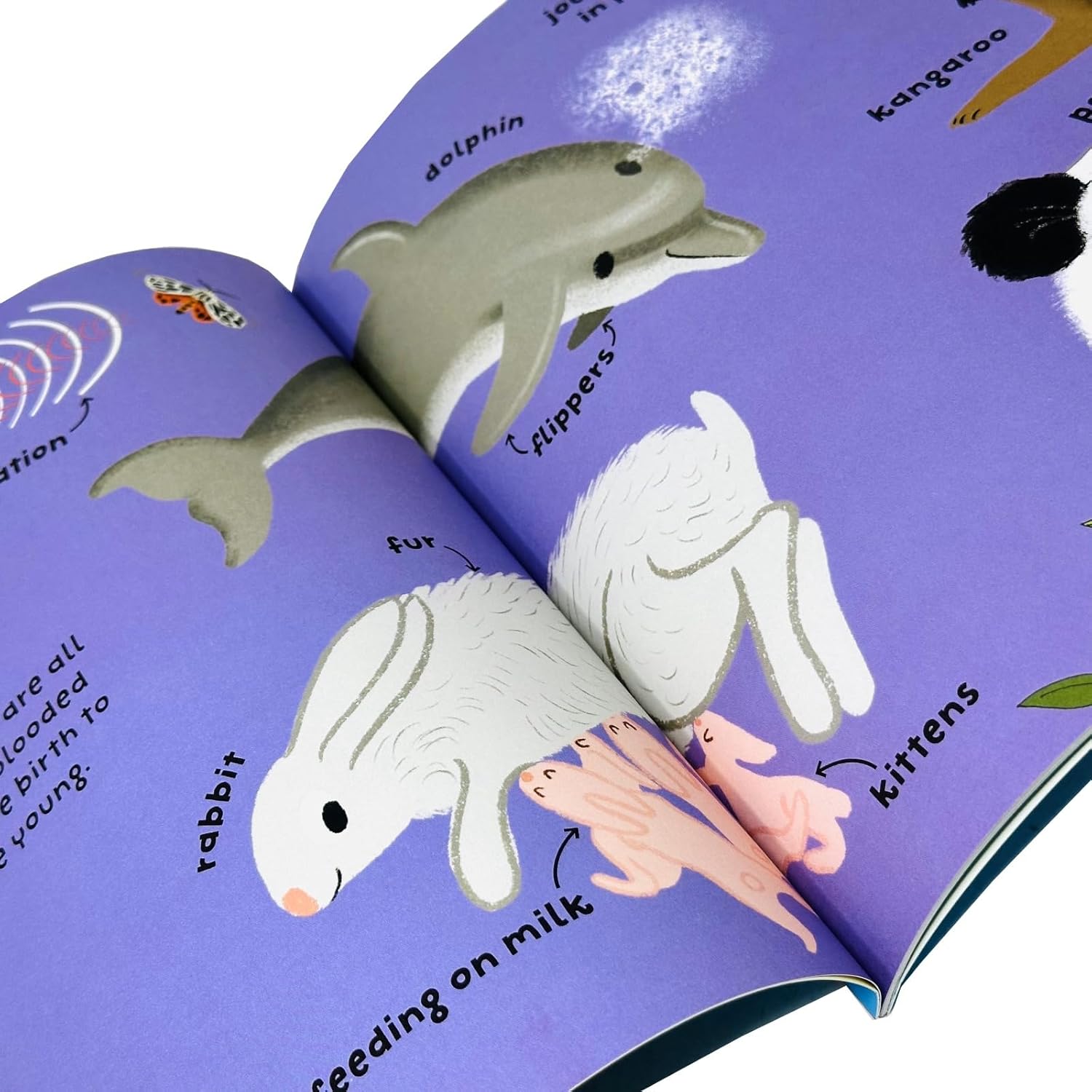
Miles Kelly Big Words for Little Experts 10 Books Collection Set by Fran Bromage - Paperback - Ages 2+ - Preschool Vocabulary & Learning Non-FictionGive your little learner a head start with the Big Words for Little Experts 10 Books Collection Set by Fran Bromage. This set of 10 paperback books, published by Miles Kelly, introduces preschoolers to exciting vocabulary across ten subjects, including animals, birds, the body, bugs, dinosaurs, habitats, mammals, oceans, our planet, and space. Each book takes a single subject and brings it to life through colourful illustrations paired with engaging text, boosting early language skills while sparking curiosity about the world.9,99 £*Shipping: 2,99 £Secure redirect to the provider
-
What does Zakat refer to in Islam?
Zakat refers to the mandatory giving of a portion of one's wealth to those in need, as prescribed in Islam. It is one of the Five Pillars of Islam and is considered a form of worship and purification of one's wealth. The amount to be given is typically 2.5% of a person's savings and assets, and it is meant to support the less fortunate and promote social justice within the Muslim community. Zakat is seen as a way to fulfill one's duty to help those in need and to promote economic equality. **
-
When do I have to pay Zakat?
You are required to pay Zakat if you have a certain amount of wealth (Nisab) that has been in your possession for a full lunar year. The Nisab is the minimum amount of wealth that makes a person eligible to pay Zakat. Once you have reached the Nisab threshold and have had the wealth in your possession for a full lunar year, you are obligated to pay Zakat on that wealth. It is important to calculate and pay Zakat on an annual basis to fulfill this important pillar of Islam. **
-
Can you deduct Zakat from your taxes?
In some countries, it is possible to deduct Zakat from your taxes if the government recognizes Zakat as a deductible charitable contribution. However, this varies by country and it is important to consult with a tax professional or local tax authority to understand the specific rules and regulations regarding Zakat deductions. Additionally, it is important to ensure that the Zakat payment meets the criteria for charitable deductions as outlined by the tax laws in your country. **
-
How does Zakat work for street animals?
Zakat can be used to help street animals by providing funds for their food, shelter, and medical care. Individuals can donate their Zakat to organizations or individuals who work to rescue, rehabilitate, and care for street animals. This can help improve the well-being of these animals and ensure they receive the necessary support for survival. By allocating Zakat towards street animals, individuals can fulfill their religious obligation while also making a positive impact on the lives of these vulnerable creatures. **
* All prices are inclusive of VAT and, if applicable, plus shipping costs. The offer information is based on the details provided by the respective shop and is updated through automated processes. Real-time updates do not occur, so deviations can occur in individual cases. ** Note: Parts of this content were created by AI.