Buy deutschkurse.eu ?
We are moving the project
deutschkurse.eu .
Are you interested in purchasing the domain
deutschkurse.eu ?
domain@kv-gmbh.de · 0541-91531010
Buy deutschkurse.eu ?
What is the derivation of the variance decomposition of the variance?
The variance decomposition of the variance is derived from the decomposition of the total variance into its components. This decomposition helps to understand the relative contributions of different sources of variation to the total variance. By partitioning the variance into its constituent parts, such as the variance due to different factors or sources, we can quantify the amount of variability explained by each component. This decomposition is commonly used in statistical analysis to assess the importance of various factors in explaining the overall variability in a dataset. **
What is variance in mathematics?
In mathematics, variance is a measure of how much a set of numbers varies or spreads out. It is a statistical measure that indicates the extent to which data points differ from the mean (average) of the set. A high variance means that the numbers in the set are spread out over a wider range, while a low variance means that the numbers are closer to the mean. Variance is calculated by taking the average of the squared differences between each data point and the mean. **


Similar search terms for Variance
Top-Angebote
Products related to Variance:
-
Spelling and Vocabulary practice activities for children ages 6-7 (Year 2). Perfect for Home Learning.: (Scholastic English Skills)Master spelling and vocabulary and build English skills This workbook supports children to develop their spelling and vocabulary skills through fun and engaging activities which will help motivate your child's learning and confidence. A progress chart is also included for children to colour in as chapters are completed, and an introduction chapter on how to use the book. Content is split into: Back to basics; New spellins work: consonants; Focus on vowel sound; Super suffixes; More suffixes; Homophones and tricky words; and Spelling words with apostrophes. Help children feel prepared, capable and ready to tackle new challenges at school. Use at home or in school. Quickly builds confidence through regular, achievable activities that encourage independent learning. Designed to complement the school curriculum, meaning children work at the right level, so nothing feels too hard or too easy. Includes extra notes and tips to reinforce skills.4,99 £*Shipping: 1,99 £Secure redirect to the provider
-
JoyToys Portable Kids Piano Toy Mini Electronic Keyboard For Montessori Music Learning & Early Education greenUnleash your child's love for music with this Mini electronic keyboard designed for curious little hands. This compact musical toy encourages creativity, rhythm, and early learning while providing hours of engaging fun. Perfect for toddlers and...59,97 $*Shipping: 0,00 $Secure redirect to the provider
-
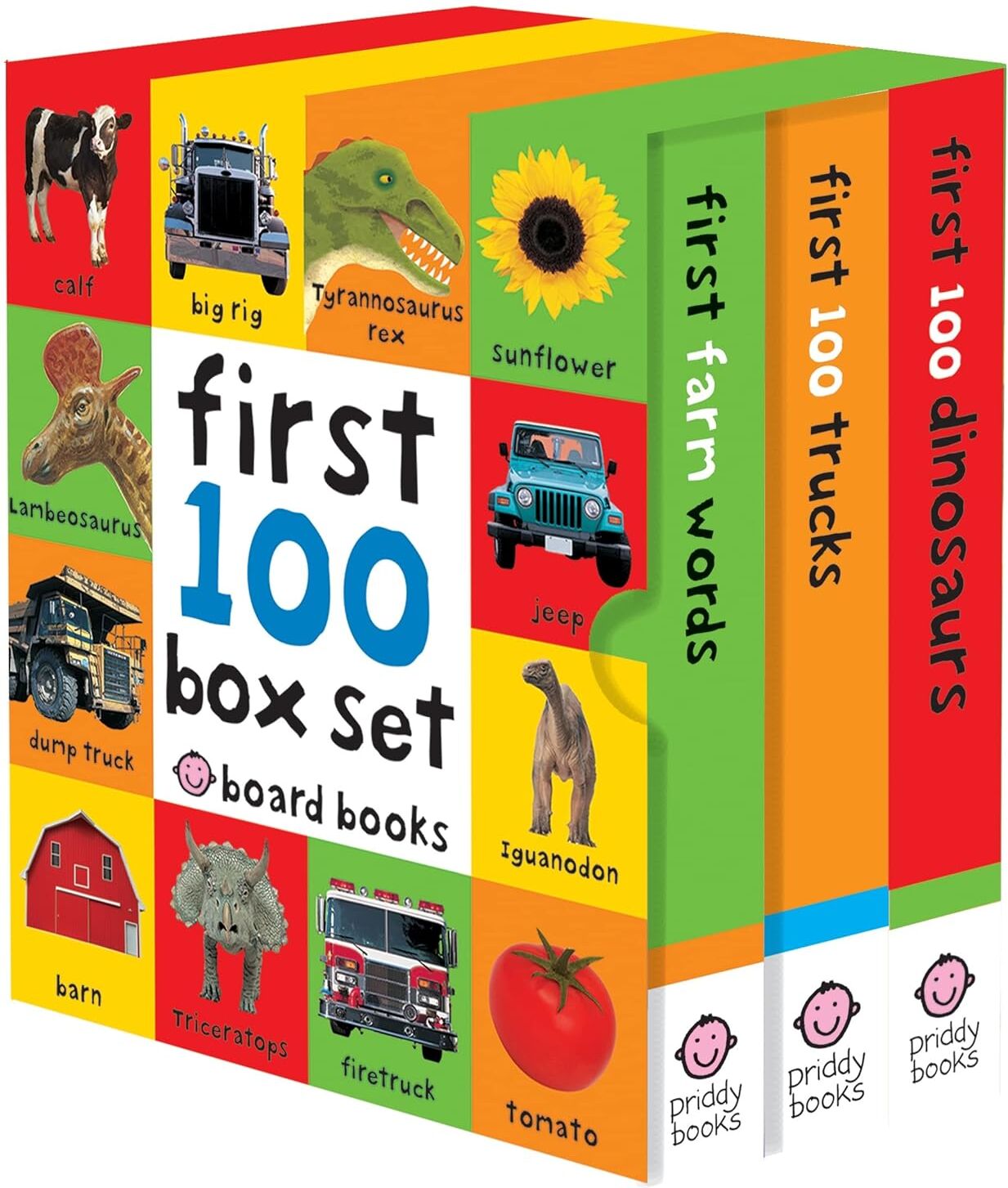
Priddy Books First 100 Box Set: Farm, Dino, Trucks by Roger Priddy - Board Book Set - Ages 0-5 - Early Learning Vocabulary BooksThe First 100 Box Set brings together three of Roger Priddy's bestselling early-learning titles in one sturdy slipcase. Featuring Farm, Dinosaurs, and Trucks, each board book uses bright photographic images and simple labelled words to build vocabulary. This compact and hard-wearing collection is ideal for little hands and makes a wonderful first library or gift set for any nursery shelf. Roger Priddy's First 100 series has become a firm favourite with parents and early-years educators thanks to its simple, effective approach to early word learning. Each of the three board books introduces 100 words through clear, vibrant photographs paired with bold, easy-to-read text. This set includes First Farm Words, First 100 Trucks, and First 100 Dinosaurs, all published by Priddy Books and suitable for children aged 0-5.8,49 £*Shipping: 2,99 £Secure redirect to the provider
-
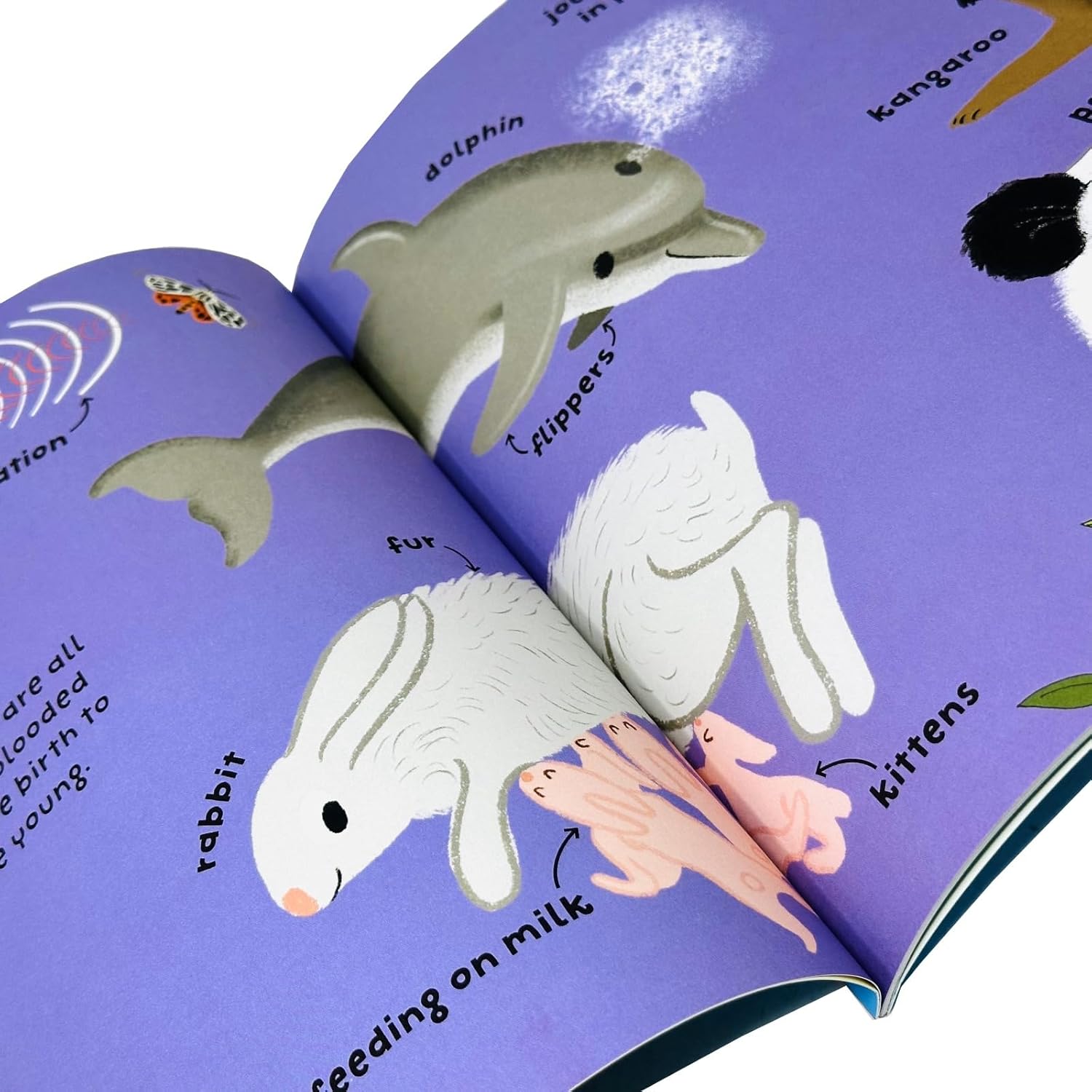
Miles Kelly Big Words for Little Experts 10 Books Collection Set by Fran Bromage - Paperback - Ages 2+ - Preschool Vocabulary & Learning Non-FictionGive your little learner a head start with the Big Words for Little Experts 10 Books Collection Set by Fran Bromage. This set of 10 paperback books, published by Miles Kelly, introduces preschoolers to exciting vocabulary across ten subjects, including animals, birds, the body, bugs, dinosaurs, habitats, mammals, oceans, our planet, and space. Each book takes a single subject and brings it to life through colourful illustrations paired with engaging text, boosting early language skills while sparking curiosity about the world.9,99 £*Shipping: 2,99 £Secure redirect to the provider


-
What is the asymptotic variance?
The asymptotic variance is a measure of the variability of an estimator as the sample size approaches infinity. It represents the limit of the variance of the estimator as the sample size becomes very large. In statistical theory, it is used to assess the precision and reliability of an estimator in the long run. A smaller asymptotic variance indicates that the estimator is more efficient and provides more precise estimates as the sample size increases. **
-
What is the difference between variance and standard deviation, and why is variance needed?
Variance and standard deviation are both measures of the spread or dispersion of a set of data. The main difference between the two is that variance is the average of the squared differences from the mean, while standard deviation is the square root of the variance. Standard deviation is often preferred over variance because it is in the same units as the original data, making it easier to interpret. However, variance is still needed in statistical calculations, such as in the calculation of the standard deviation, and it provides valuable information about the variability of the data. **
-
What is variance explanation in psychology?
Variance explanation in psychology refers to the extent to which a particular variable or set of variables can account for the variability in a certain psychological phenomenon or behavior. It is a measure of how much of the variability in a particular outcome can be attributed to the variables being studied. For example, in a study on the factors influencing depression, variance explanation would indicate how much of the variability in depression scores can be explained by factors such as genetics, environment, or personality traits. Understanding the variance explanation in psychology is important for identifying the key factors that contribute to a particular psychological outcome. **
-
How do you calculate variance correctly?
Variance is calculated by finding the average of the squared differences between each data point and the mean of the data set. First, calculate the mean of the data set. Then, subtract the mean from each data point, square the result, and find the average of these squared differences. This average is the variance. The formula for variance is: variance = Σ (x - μ)² / n, where Σ represents the sum of the squared differences, x is each data point, μ is the mean, and n is the number of data points. **

How can the variance be transformed?
The variance can be transformed by applying a linear transformation to the data. This can involve multiplying each data point by a constant, adding a constant to each data point, or a combination of both. Another way to transform the variance is by applying a non-linear transformation to the data, such as taking the square root or the logarithm of the data. These transformations can help to stabilize the variance, make the data more normally distributed, or make the variance more homogeneous across different groups or levels of a factor. **
What does variance stand for in statistics?
In statistics, variance is a measure of how spread out a set of data points are from the mean. It quantifies the variability or dispersion of a dataset. A high variance indicates that the data points are spread out widely, while a low variance indicates that the data points are clustered closely around the mean. Variance is calculated by taking the average of the squared differences between each data point and the mean. **
Top-Angebote
Products related to Variance:
-
Learning Resources Scramboozle Educational Game for Kids - Ages 6+ - Encourages Critical Thinking and Boosts Vocabulary SkillsIntroduce your little ones to the exciting world of learning with the Learning Resources Scramboozle Educational Game for Kids. This engaging game is designed to make learning fun while enhancing essential skills such as critical thinking, vocabulary, and teamwork. With its colorful cards and playful design, Scramboozle stimulates imagination and encourages interactive play. Perfect for family game nights or friendly competitions, Scramboozle invites children to decode silly words and race against the clock. It’s a delightful game that can be enjoyed by children aged 6 and up. Whether it's a gift for a birthday or a classroom resource, Scramboozle makes learning an enjoyable experience. It encourages critical thinking and boosts vocabulary skills with its colorful and engaging design.8,19 £*Shipping: 3,95 £Secure redirect to the provider
-
United Radish Baby Learning Phone Toy With Music, Lights & Early Education Activities pinkWake up your little ones curiosity with a fun and interactive baby learning phone designed to inspire early development through play. This adorable radishshaped toy combines engaging sounds, music, and colorful buttons to keep toddlers entertained...39,97 $*Shipping: 0,00 $Secure redirect to the provider
-
Spelling and Vocabulary practice activities for children ages 6-7 (Year 2). Perfect for Home Learning.: (Scholastic English Skills)Master spelling and vocabulary and build English skills This workbook supports children to develop their spelling and vocabulary skills through fun and engaging activities which will help motivate your child's learning and confidence. A progress chart is also included for children to colour in as chapters are completed, and an introduction chapter on how to use the book. Content is split into: Back to basics; New spellins work: consonants; Focus on vowel sound; Super suffixes; More suffixes; Homophones and tricky words; and Spelling words with apostrophes. Help children feel prepared, capable and ready to tackle new challenges at school. Use at home or in school. Quickly builds confidence through regular, achievable activities that encourage independent learning. Designed to complement the school curriculum, meaning children work at the right level, so nothing feels too hard or too easy. Includes extra notes and tips to reinforce skills.4,99 £*Shipping: 1,99 £Secure redirect to the provider
-
JoyToys Portable Kids Piano Toy Mini Electronic Keyboard For Montessori Music Learning & Early Education greenUnleash your child's love for music with this Mini electronic keyboard designed for curious little hands. This compact musical toy encourages creativity, rhythm, and early learning while providing hours of engaging fun. Perfect for toddlers and...59,97 $*Shipping: 0,00 $Secure redirect to the provider
-
What is the derivation of the variance decomposition of the variance?
The variance decomposition of the variance is derived from the decomposition of the total variance into its components. This decomposition helps to understand the relative contributions of different sources of variation to the total variance. By partitioning the variance into its constituent parts, such as the variance due to different factors or sources, we can quantify the amount of variability explained by each component. This decomposition is commonly used in statistical analysis to assess the importance of various factors in explaining the overall variability in a dataset. **
-
What is variance in mathematics?
In mathematics, variance is a measure of how much a set of numbers varies or spreads out. It is a statistical measure that indicates the extent to which data points differ from the mean (average) of the set. A high variance means that the numbers in the set are spread out over a wider range, while a low variance means that the numbers are closer to the mean. Variance is calculated by taking the average of the squared differences between each data point and the mean. **
-
What is the asymptotic variance?
The asymptotic variance is a measure of the variability of an estimator as the sample size approaches infinity. It represents the limit of the variance of the estimator as the sample size becomes very large. In statistical theory, it is used to assess the precision and reliability of an estimator in the long run. A smaller asymptotic variance indicates that the estimator is more efficient and provides more precise estimates as the sample size increases. **
-
What is the difference between variance and standard deviation, and why is variance needed?
Variance and standard deviation are both measures of the spread or dispersion of a set of data. The main difference between the two is that variance is the average of the squared differences from the mean, while standard deviation is the square root of the variance. Standard deviation is often preferred over variance because it is in the same units as the original data, making it easier to interpret. However, variance is still needed in statistical calculations, such as in the calculation of the standard deviation, and it provides valuable information about the variability of the data. **
Similar search terms for Variance
-
Priddy Books First 100 Box Set: Farm, Dino, Trucks by Roger Priddy - Board Book Set - Ages 0-5 - Early Learning Vocabulary BooksThe First 100 Box Set brings together three of Roger Priddy's bestselling early-learning titles in one sturdy slipcase. Featuring Farm, Dinosaurs, and Trucks, each board book uses bright photographic images and simple labelled words to build vocabulary. This compact and hard-wearing collection is ideal for little hands and makes a wonderful first library or gift set for any nursery shelf. Roger Priddy's First 100 series has become a firm favourite with parents and early-years educators thanks to its simple, effective approach to early word learning. Each of the three board books introduces 100 words through clear, vibrant photographs paired with bold, easy-to-read text. This set includes First Farm Words, First 100 Trucks, and First 100 Dinosaurs, all published by Priddy Books and suitable for children aged 0-5.8,49 £*Shipping: 2,99 £Secure redirect to the provider
-
Miles Kelly Big Words for Little Experts 10 Books Collection Set by Fran Bromage - Paperback - Ages 2+ - Preschool Vocabulary & Learning Non-FictionGive your little learner a head start with the Big Words for Little Experts 10 Books Collection Set by Fran Bromage. This set of 10 paperback books, published by Miles Kelly, introduces preschoolers to exciting vocabulary across ten subjects, including animals, birds, the body, bugs, dinosaurs, habitats, mammals, oceans, our planet, and space. Each book takes a single subject and brings it to life through colourful illustrations paired with engaging text, boosting early language skills while sparking curiosity about the world.9,99 £*Shipping: 2,99 £Secure redirect to the provider
-
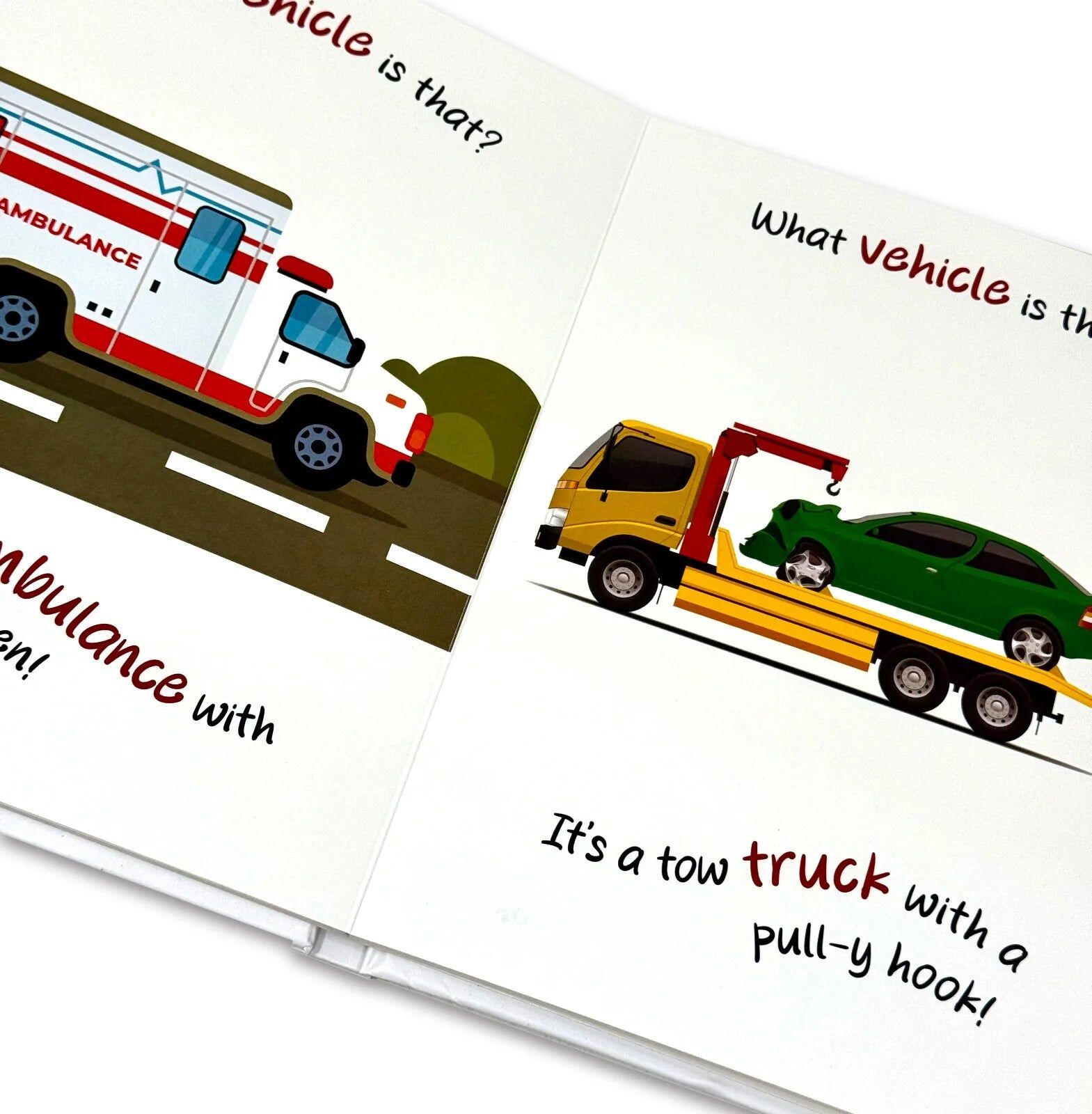
Rupa Publications India What Vehicle Is That? by Moonstone - Early Learning Board Book for Toddlers - Ages 0-2 - Vehicle Names & Vocabulary BuildingWhat Vehicle Is That? is a brightly illustrated board book from Moonstone, introducing young readers to the world of transport. Built for tiny hands, it pairs bold, simple pictures with familiar vehicle names, turning everyday journeys and playtime into early word recognition. The durable board pages can withstand repeated flipping, chewing, and curious little fingers, making this a dependable addition to any nursery bookshelf or baby bag. Toddlers are naturally drawn to things that move, and What Vehicle Is That? taps into that fascination. Each sturdy spread focuses on a different vehicle, from cars and buses to trucks and emergency vehicles, presenting one clear image alongside its name so babies and toddlers can start matching words to pictures. The simple, uncluttered layout is intentional: at this age, children benefit from clear and concise information.2,99 £*Shipping: 2,99 £Secure redirect to the provider
-
Fusion Finds Touch And Feel Babies Book, Funny Sensory Tails Book For Early Education Creative Toddler Interactive Learning Toy oceanEngage & Educate with Interactive Sensory PlayGive your child the gift of handson learning with our touch and feel babies book! Designed for funny sensory babies books, this early education toy features playful animal tails that spark curiosity and...27,97 $*Shipping: 0,00 $Secure redirect to the provider
-
What is variance explanation in psychology?
Variance explanation in psychology refers to the extent to which a particular variable or set of variables can account for the variability in a certain psychological phenomenon or behavior. It is a measure of how much of the variability in a particular outcome can be attributed to the variables being studied. For example, in a study on the factors influencing depression, variance explanation would indicate how much of the variability in depression scores can be explained by factors such as genetics, environment, or personality traits. Understanding the variance explanation in psychology is important for identifying the key factors that contribute to a particular psychological outcome. **
-
How do you calculate variance correctly?
Variance is calculated by finding the average of the squared differences between each data point and the mean of the data set. First, calculate the mean of the data set. Then, subtract the mean from each data point, square the result, and find the average of these squared differences. This average is the variance. The formula for variance is: variance = Σ (x - μ)² / n, where Σ represents the sum of the squared differences, x is each data point, μ is the mean, and n is the number of data points. **
-
How can the variance be transformed?
The variance can be transformed by applying a linear transformation to the data. This can involve multiplying each data point by a constant, adding a constant to each data point, or a combination of both. Another way to transform the variance is by applying a non-linear transformation to the data, such as taking the square root or the logarithm of the data. These transformations can help to stabilize the variance, make the data more normally distributed, or make the variance more homogeneous across different groups or levels of a factor. **
-
What does variance stand for in statistics?
In statistics, variance is a measure of how spread out a set of data points are from the mean. It quantifies the variability or dispersion of a dataset. A high variance indicates that the data points are spread out widely, while a low variance indicates that the data points are clustered closely around the mean. Variance is calculated by taking the average of the squared differences between each data point and the mean. **
* All prices are inclusive of VAT and, if applicable, plus shipping costs. The offer information is based on the details provided by the respective shop and is updated through automated processes. Real-time updates do not occur, so deviations can occur in individual cases. ** Note: Parts of this content were created by AI.