Buy deutschkurse.eu ?
We are moving the project
deutschkurse.eu .
Are you interested in purchasing the domain
deutschkurse.eu ?
domain@kv-gmbh.de · 0541-91531010
Buy deutschkurse.eu ?
What is an RLC circuit?
An RLC circuit is an electrical circuit consisting of a resistor (R), inductor (L), and capacitor (C). These components are connected in series or parallel and interact with each other to create a complex impedance. RLC circuits are commonly used in electronics for filtering, tuning, and signal processing applications. The behavior of an RLC circuit can vary depending on the values of the components and the frequency of the input signal. **
What is the Reolink RLC 823A?
The Reolink RLC 823A is a high-definition security camera designed for outdoor use. It features 5MP super HD resolution, advanced night vision up to 100 feet, and a built-in microphone for audio recording. The camera also has a wide viewing angle of 87.5 degrees, motion detection capabilities, and can be connected to a Reolink NVR or used as a standalone camera with the Reolink app. Overall, the Reolink RLC 823A is a reliable and versatile security camera for monitoring your property. **
Similar search terms for RLC
Top-Angebote
Products related to RLC:
-
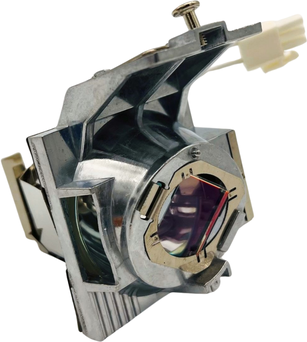
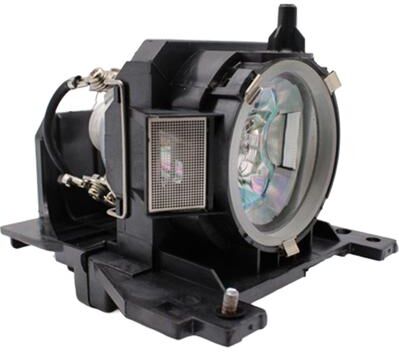
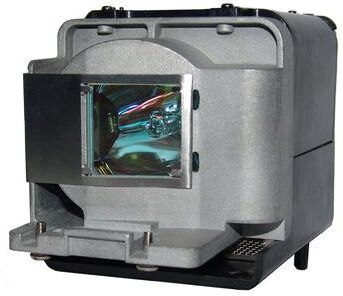
Jaspertronics™ Original RLC-124 Lamp & Housing for Viewsonic Projectors - 1 Year WarrantyNew Jaspertronics™ Original Lamp & Housing Module for the following Viewsonic models: RLC-124, RLC108 Lamp Specifications Specifications Data Product Code RLC-124 Part Type Lamp & Housing Warranty Industry Leading 1 Year Warranty Condition New Lamp...108,99 $*Shipping: 0,00 $Secure redirect to the provider
-
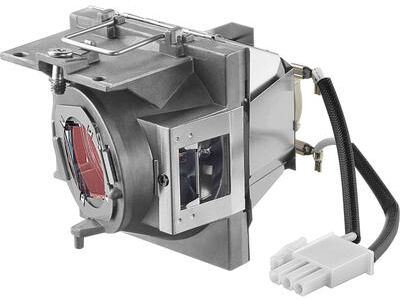
Jaspertronics™ Original RLC-119 Lamp & Housing for Viewsonic Projectors - 1 Year WarrantyNew Jaspertronics™ Original Lamp & Housing Module for the following Viewsonic models: RLC-119 Lamp Specifications Specifications Data Product Code RLC-119 Part Type Lamp & Housing Warranty Industry Leading 1 Year Warranty Condition New Lamp Type...109,99 $*Shipping: 0,00 $Secure redirect to the provider
-
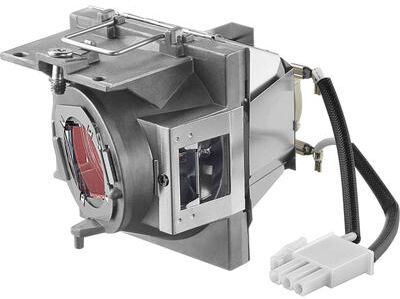
Jaspertronics™ Original RLC-118 Lamp & Housing for Viewsonic Projectors - 1 Year WarrantyNew Jaspertronics™ Original Lamp & Housing Module for the following Viewsonic models: RLC-118 Lamp Specifications Specifications Data Product Code RLC-118 Part Type Lamp and Housing Warranty Industry Leading 1 Year Warranty Condition New Lamp Type...98,99 $*Shipping: 0,00 $Secure redirect to the provider
-
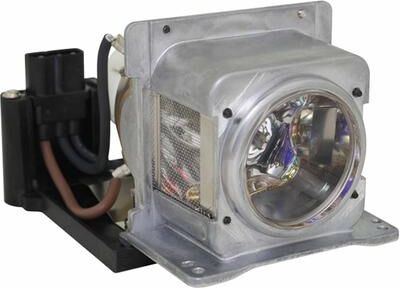
Jaspertronics™ Original RLC-019 Lamp & Housing for Viewsonic Projectors - 1 Year WarrantyNew Jaspertronics™ Original Lamp & Housing Module for the following Viewsonic models: RLC-019 Lamp Specifications Specifications Data Product Code RLC-019 Part Type Lamp and Housing Warranty Industry Leading 1 Year Warranty Condition New Lamp Type...124,99 $*Shipping: 0,00 $Secure redirect to the provider


-
What is the transfer function of an RLC circuit?
The transfer function of an RLC circuit is a mathematical representation that describes the relationship between the input and output of the circuit in the frequency domain. It is typically expressed as a ratio of the output voltage to the input voltage, or the output current to the input current, as a function of frequency. The transfer function of an RLC circuit is influenced by the values of the resistance, inductance, and capacitance components in the circuit, and it can be used to analyze the circuit's behavior and response to different input signals. **
-
What is the transfer function for an RLC resonant circuit?
The transfer function for an RLC resonant circuit is given by H(s) = Vout(s)/Vin(s) = 1 / (1 - s^2LC + j(sRC - 1/RC)). Here, s is the Laplace variable, L is the inductance, C is the capacitance, and R is the resistance in the circuit. This transfer function describes the relationship between the input voltage Vin and the output voltage Vout of the RLC resonant circuit, and it shows how the circuit responds to different frequencies. The transfer function also reveals the resonance frequency and the bandwidth of the circuit. **
-
How can one rearrange the formula for an RLC series circuit to solve for XC?
To rearrange the formula for an RLC series circuit to solve for XC, you can start with the impedance formula Z = √(R^2 + (XL - XC)^2), where Z is the total impedance, R is the resistance, XL is the inductive reactance, and XC is the capacitive reactance. Then, you can isolate XC by rearranging the formula to solve for XC. This can be done by first squaring both sides of the equation, then isolating XC and taking the square root of the remaining terms. This will give you the formula to solve for XC in terms of the total impedance, resistance, and inductive reactance. **
-
What is German language teaching education?
German language teaching education is the process of preparing individuals to teach the German language to non-native speakers. This education typically includes coursework in German language and literature, as well as pedagogical training in language teaching methods and strategies. It also involves developing cultural competency and understanding of the German-speaking world. Graduates of German language teaching education programs are equipped to teach German at various levels, from elementary to advanced, in a variety of educational settings such as schools, language institutes, and universities. **
Which vocabulary learning app?
There are several popular vocabulary learning apps available, each with its own unique features and benefits. Some popular options include Duolingo, Quizlet, and Memrise. Duolingo offers a wide range of languages and uses gamified lessons to make learning fun. Quizlet allows users to create their own study sets and offers a variety of study modes. Memrise focuses on using mnemonic devices and real-life videos to help users remember vocabulary. Ultimately, the best app for you will depend on your learning style and the specific features you are looking for. **
Why is the admittance triangle used instead of the normal resistance triangle in an RLC parallel circuit?
The admittance triangle is used in an RLC parallel circuit because it represents the reciprocal of impedance, which is known as admittance. In a parallel circuit, the total impedance is the sum of the individual admittances, making it easier to calculate the total impedance using the admittance triangle. Additionally, using the admittance triangle simplifies calculations involving conductance and susceptance, which are the real and imaginary parts of admittance, respectively. This makes it more convenient to analyze and solve parallel RLC circuits. **
Top-Angebote
Products related to RLC:
-
Jaspertronics™ Original RLC-120 Lamp & Housing for Viewsonic Projectors - 1 Year WarrantyNew Jaspertronics™ Original Lamp & Housing Module for the following Viewsonic models: RLC-120 Lamp Specifications Specifications Data Product Code RLC-120 Part Type Lamp & Housing Warranty Industry Leading 1 Year Warranty Condition New Lamp Type...106,99 $*Shipping: 0,00 $Secure redirect to the provider
-
Jaspertronics™ Original RLC-114 Lamp & Housing for Viewsonic Projectors - 1 Year WarrantyNew Jaspertronics™ Original Lamp & Housing Module for the following Viewsonic models: RLC-114, RLC108 Lamp Specifications Specifications Data Product Code RLC-114 Part Type Lamp & Housing Warranty Industry Leading 1 Year Warranty Condition New Lamp...108,99 $*Shipping: 0,00 $Secure redirect to the provider
-
Jaspertronics™ Original RLC-124 Lamp & Housing for Viewsonic Projectors - 1 Year WarrantyNew Jaspertronics™ Original Lamp & Housing Module for the following Viewsonic models: RLC-124, RLC108 Lamp Specifications Specifications Data Product Code RLC-124 Part Type Lamp & Housing Warranty Industry Leading 1 Year Warranty Condition New Lamp...108,99 $*Shipping: 0,00 $Secure redirect to the provider
-
Jaspertronics™ Original RLC-119 Lamp & Housing for Viewsonic Projectors - 1 Year WarrantyNew Jaspertronics™ Original Lamp & Housing Module for the following Viewsonic models: RLC-119 Lamp Specifications Specifications Data Product Code RLC-119 Part Type Lamp & Housing Warranty Industry Leading 1 Year Warranty Condition New Lamp Type...109,99 $*Shipping: 0,00 $Secure redirect to the provider
-
What is an RLC circuit?
An RLC circuit is an electrical circuit consisting of a resistor (R), inductor (L), and capacitor (C). These components are connected in series or parallel and interact with each other to create a complex impedance. RLC circuits are commonly used in electronics for filtering, tuning, and signal processing applications. The behavior of an RLC circuit can vary depending on the values of the components and the frequency of the input signal. **
-
What is the Reolink RLC 823A?
The Reolink RLC 823A is a high-definition security camera designed for outdoor use. It features 5MP super HD resolution, advanced night vision up to 100 feet, and a built-in microphone for audio recording. The camera also has a wide viewing angle of 87.5 degrees, motion detection capabilities, and can be connected to a Reolink NVR or used as a standalone camera with the Reolink app. Overall, the Reolink RLC 823A is a reliable and versatile security camera for monitoring your property. **
-
What is the transfer function of an RLC circuit?
The transfer function of an RLC circuit is a mathematical representation that describes the relationship between the input and output of the circuit in the frequency domain. It is typically expressed as a ratio of the output voltage to the input voltage, or the output current to the input current, as a function of frequency. The transfer function of an RLC circuit is influenced by the values of the resistance, inductance, and capacitance components in the circuit, and it can be used to analyze the circuit's behavior and response to different input signals. **
-
What is the transfer function for an RLC resonant circuit?
The transfer function for an RLC resonant circuit is given by H(s) = Vout(s)/Vin(s) = 1 / (1 - s^2LC + j(sRC - 1/RC)). Here, s is the Laplace variable, L is the inductance, C is the capacitance, and R is the resistance in the circuit. This transfer function describes the relationship between the input voltage Vin and the output voltage Vout of the RLC resonant circuit, and it shows how the circuit responds to different frequencies. The transfer function also reveals the resonance frequency and the bandwidth of the circuit. **
Similar search terms for RLC
-
Jaspertronics™ Original RLC-118 Lamp & Housing for Viewsonic Projectors - 1 Year WarrantyNew Jaspertronics™ Original Lamp & Housing Module for the following Viewsonic models: RLC-118 Lamp Specifications Specifications Data Product Code RLC-118 Part Type Lamp and Housing Warranty Industry Leading 1 Year Warranty Condition New Lamp Type...98,99 $*Shipping: 0,00 $Secure redirect to the provider
-
Jaspertronics™ Original RLC-019 Lamp & Housing for Viewsonic Projectors - 1 Year WarrantyNew Jaspertronics™ Original Lamp & Housing Module for the following Viewsonic models: RLC-019 Lamp Specifications Specifications Data Product Code RLC-019 Part Type Lamp and Housing Warranty Industry Leading 1 Year Warranty Condition New Lamp Type...124,99 $*Shipping: 0,00 $Secure redirect to the provider
-
Jaspertronics™ Original RLC-031 Lamp & Housing for Viewsonic Projectors - 1 Year WarrantyNew Jaspertronics™ Original Lamp & Housing Module for the following Viewsonic models: RLC-031 Lamp Specifications Specifications Data Product Code RLC-031 Part Type Lamp and Housing Warranty Industry Leading 1 Year Warranty Condition New Lamp Type...86,99 $*Shipping: 0,00 $Secure redirect to the provider
-
AL™ Series RLC-061 Lamp & Housing for Viewsonic Projectors - 90 Day WarrantyNew aftermarket Lamp and Housing for the following Viewsonic models: RLC-061 Lamp Specifications Specifications Data Product Code RLC-061 Part Type Lamp and Housing Warranty 90 Days Condition New Lamp Type Genuine AL™ Series Discounts Available...48,99 $*Shipping: 0,00 $Secure redirect to the provider
-
How can one rearrange the formula for an RLC series circuit to solve for XC?
To rearrange the formula for an RLC series circuit to solve for XC, you can start with the impedance formula Z = √(R^2 + (XL - XC)^2), where Z is the total impedance, R is the resistance, XL is the inductive reactance, and XC is the capacitive reactance. Then, you can isolate XC by rearranging the formula to solve for XC. This can be done by first squaring both sides of the equation, then isolating XC and taking the square root of the remaining terms. This will give you the formula to solve for XC in terms of the total impedance, resistance, and inductive reactance. **
-
What is German language teaching education?
German language teaching education is the process of preparing individuals to teach the German language to non-native speakers. This education typically includes coursework in German language and literature, as well as pedagogical training in language teaching methods and strategies. It also involves developing cultural competency and understanding of the German-speaking world. Graduates of German language teaching education programs are equipped to teach German at various levels, from elementary to advanced, in a variety of educational settings such as schools, language institutes, and universities. **
-
Which vocabulary learning app?
There are several popular vocabulary learning apps available, each with its own unique features and benefits. Some popular options include Duolingo, Quizlet, and Memrise. Duolingo offers a wide range of languages and uses gamified lessons to make learning fun. Quizlet allows users to create their own study sets and offers a variety of study modes. Memrise focuses on using mnemonic devices and real-life videos to help users remember vocabulary. Ultimately, the best app for you will depend on your learning style and the specific features you are looking for. **
-
Why is the admittance triangle used instead of the normal resistance triangle in an RLC parallel circuit?
The admittance triangle is used in an RLC parallel circuit because it represents the reciprocal of impedance, which is known as admittance. In a parallel circuit, the total impedance is the sum of the individual admittances, making it easier to calculate the total impedance using the admittance triangle. Additionally, using the admittance triangle simplifies calculations involving conductance and susceptance, which are the real and imaginary parts of admittance, respectively. This makes it more convenient to analyze and solve parallel RLC circuits. **
* All prices are inclusive of VAT and, if applicable, plus shipping costs. The offer information is based on the details provided by the respective shop and is updated through automated processes. Real-time updates do not occur, so deviations can occur in individual cases. ** Note: Parts of this content were created by AI.