Buy deutschkurse.eu ?
We are moving the project
deutschkurse.eu .
Are you interested in purchasing the domain
deutschkurse.eu ?
domain@kv-gmbh.de · 0541-91531010
Buy deutschkurse.eu ?
How do I multiply a fraction by a fraction?
To multiply a fraction by a fraction, you simply multiply the numerators together to get the new numerator, and then multiply the denominators together to get the new denominator. For example, if you want to multiply 1/2 by 2/3, you would multiply 1 and 2 to get 2 as the new numerator, and multiply 2 and 3 to get 6 as the new denominator. Therefore, 1/2 multiplied by 2/3 equals 2/6, which can be simplified to 1/3. **
Is 1150 a finite fraction or a repeating fraction?
1150 is a finite fraction because it can be expressed as a whole number divided by another whole number. In this case, 1150 can be written as 1150/1, which is a finite fraction. A repeating fraction would have a pattern of digits that repeats infinitely after the decimal point, which is not the case for 1150. **


Similar search terms for Fraction
Top-Angebote
Products related to Fraction:
-
Learning Resources Scramboozle Educational Game for Kids - Ages 6+ - Encourages Critical Thinking and Boosts Vocabulary SkillsIntroduce your little ones to the exciting world of learning with the Learning Resources Scramboozle Educational Game for Kids. This engaging game is designed to make learning fun while enhancing essential skills such as critical thinking, vocabulary, and teamwork. With its colorful cards and playful design, Scramboozle stimulates imagination and encourages interactive play. Perfect for family game nights or friendly competitions, Scramboozle invites children to decode silly words and race against the clock. It’s a delightful game that can be enjoyed by children aged 6 and up. Whether it's a gift for a birthday or a classroom resource, Scramboozle makes learning an enjoyable experience. It encourages critical thinking and boosts vocabulary skills with its colorful and engaging design.8,19 £*Shipping: 3,95 £Secure redirect to the provider
-
United Radish Baby Learning Phone Toy With Music, Lights & Early Education Activities pinkWake up your little ones curiosity with a fun and interactive baby learning phone designed to inspire early development through play. This adorable radishshaped toy combines engaging sounds, music, and colorful buttons to keep toddlers entertained...39,97 $*Shipping: 0,00 $Secure redirect to the provider
-
Spelling and Vocabulary practice activities for children ages 6-7 (Year 2). Perfect for Home Learning.: (Scholastic English Skills)Master spelling and vocabulary and build English skills This workbook supports children to develop their spelling and vocabulary skills through fun and engaging activities which will help motivate your child's learning and confidence. A progress chart is also included for children to colour in as chapters are completed, and an introduction chapter on how to use the book. Content is split into: Back to basics; New spellins work: consonants; Focus on vowel sound; Super suffixes; More suffixes; Homophones and tricky words; and Spelling words with apostrophes. Help children feel prepared, capable and ready to tackle new challenges at school. Use at home or in school. Quickly builds confidence through regular, achievable activities that encourage independent learning. Designed to complement the school curriculum, meaning children work at the right level, so nothing feels too hard or too easy. Includes extra notes and tips to reinforce skills.4,99 £*Shipping: 1,99 £Secure redirect to the provider
-
JoyToys Portable Kids Piano Toy Mini Electronic Keyboard For Montessori Music Learning & Early Education greenUnleash your child's love for music with this Mini electronic keyboard designed for curious little hands. This compact musical toy encourages creativity, rhythm, and early learning while providing hours of engaging fun. Perfect for toddlers and...59,97 $*Shipping: 0,00 $Secure redirect to the provider


-
How do you multiply a fraction by a fraction?
To multiply a fraction by a fraction, you simply multiply the numerators together to get the new numerator, and then multiply the denominators together to get the new denominator. For example, if you want to multiply 1/2 by 3/4, you would multiply 1 and 3 to get 3 as the new numerator, and then multiply 2 and 4 to get 8 as the new denominator. So, 1/2 multiplied by 3/4 equals 3/8. **
-
How do I multiply a fraction by another fraction?
To multiply a fraction by another fraction, you simply multiply the numerators together to get the new numerator, and multiply the denominators together to get the new denominator. For example, if you want to multiply 1/2 by 2/3, you would multiply 1 and 2 to get 2 as the new numerator, and multiply 2 and 3 to get 6 as the new denominator. So, 1/2 multiplied by 2/3 equals 2/6, which can be simplified to 1/3. **
-
How can one convert a fraction into a hundredth fraction?
To convert a fraction into a hundredth fraction, you need to first find an equivalent fraction with a denominator of 100. To do this, multiply both the numerator and denominator of the original fraction by a number that will make the denominator 100 (e.g., if the original fraction is 1/4, multiply both the numerator and denominator by 25 to get 25/100). This will give you the fraction in hundredths. **
-
How can a fraction be converted into a hundredth fraction?
To convert a fraction into a hundredth fraction, you need to first find an equivalent fraction with a denominator of 100. To do this, you can multiply both the numerator and denominator of the original fraction by a number that will make the denominator 100. For example, if you have the fraction 3/4, you can multiply both the numerator and denominator by 25 to get 75/100. This is the fraction equivalent to 3/4 in hundredths. **
How can you convert a fraction into a hundredth fraction?
To convert a fraction into a hundredth fraction, you need to first make sure the denominator is 100. If the denominator is not already 100, you can multiply both the numerator and denominator by the same number to make the denominator 100. For example, if you have the fraction 1/4, you can multiply both the numerator and denominator by 25 to get 25/100, which is the hundredth fraction equivalent of 1/4. **
How does one convert from molar fraction to mass fraction?
To convert from molar fraction to mass fraction, you need to know the molar mass of each component in the mixture. First, calculate the mass of each component by multiplying its molar fraction by the total mass of the mixture. Then, divide the mass of each component by the total mass of the mixture to get the mass fraction. Finally, express the mass fraction as a percentage by multiplying by 100. **
Top-Angebote
Products related to Fraction:
-
Market Central Digital Caliper With Large LCD Inch Metric Fraction Measuring Tool Digital Caliper With Large LCD Inch Metric Fraction Measuring ToolGet measurements quickly and clearly without struggling with tiny scale markings. This lightweight digital vernier caliper offers a 150mm measuring range with an easytoread LCD screen for convenient everyday measuring. Switch between inch metric and...34,97 $*Shipping: 0,00 $Secure redirect to the provider
-
Discount Dollar Deals Digital Vernier Caliper, Inch Metric Fraction Conversion Tool, Large LCD Display Plastic Caliper For Precise Measurement Digital Vernier Caliper, Inch Metric Fraction Conversion Tool, Large LCD Display Plastic Caliper For Precise MeaThe Vernier Caliper Plastic Digital Caliper is a musthave tool for anyone needing accurate and efficient measurements. Whether you're a DIY enthusiast, a professional in engineering or woodworking, or a student learning the ropes, this tool delivers...74,97 $*Shipping: 0,00 $Secure redirect to the provider
-
Learning Resources Scramboozle Educational Game for Kids - Ages 6+ - Encourages Critical Thinking and Boosts Vocabulary SkillsIntroduce your little ones to the exciting world of learning with the Learning Resources Scramboozle Educational Game for Kids. This engaging game is designed to make learning fun while enhancing essential skills such as critical thinking, vocabulary, and teamwork. With its colorful cards and playful design, Scramboozle stimulates imagination and encourages interactive play. Perfect for family game nights or friendly competitions, Scramboozle invites children to decode silly words and race against the clock. It’s a delightful game that can be enjoyed by children aged 6 and up. Whether it's a gift for a birthday or a classroom resource, Scramboozle makes learning an enjoyable experience. It encourages critical thinking and boosts vocabulary skills with its colorful and engaging design.8,19 £*Shipping: 3,95 £Secure redirect to the provider
-
United Radish Baby Learning Phone Toy With Music, Lights & Early Education Activities pinkWake up your little ones curiosity with a fun and interactive baby learning phone designed to inspire early development through play. This adorable radishshaped toy combines engaging sounds, music, and colorful buttons to keep toddlers entertained...39,97 $*Shipping: 0,00 $Secure redirect to the provider
-
How do I multiply a fraction by a fraction?
To multiply a fraction by a fraction, you simply multiply the numerators together to get the new numerator, and then multiply the denominators together to get the new denominator. For example, if you want to multiply 1/2 by 2/3, you would multiply 1 and 2 to get 2 as the new numerator, and multiply 2 and 3 to get 6 as the new denominator. Therefore, 1/2 multiplied by 2/3 equals 2/6, which can be simplified to 1/3. **
-
Is 1150 a finite fraction or a repeating fraction?
1150 is a finite fraction because it can be expressed as a whole number divided by another whole number. In this case, 1150 can be written as 1150/1, which is a finite fraction. A repeating fraction would have a pattern of digits that repeats infinitely after the decimal point, which is not the case for 1150. **
-
How do you multiply a fraction by a fraction?
To multiply a fraction by a fraction, you simply multiply the numerators together to get the new numerator, and then multiply the denominators together to get the new denominator. For example, if you want to multiply 1/2 by 3/4, you would multiply 1 and 3 to get 3 as the new numerator, and then multiply 2 and 4 to get 8 as the new denominator. So, 1/2 multiplied by 3/4 equals 3/8. **
-
How do I multiply a fraction by another fraction?
To multiply a fraction by another fraction, you simply multiply the numerators together to get the new numerator, and multiply the denominators together to get the new denominator. For example, if you want to multiply 1/2 by 2/3, you would multiply 1 and 2 to get 2 as the new numerator, and multiply 2 and 3 to get 6 as the new denominator. So, 1/2 multiplied by 2/3 equals 2/6, which can be simplified to 1/3. **
Similar search terms for Fraction
-
Spelling and Vocabulary practice activities for children ages 6-7 (Year 2). Perfect for Home Learning.: (Scholastic English Skills)Master spelling and vocabulary and build English skills This workbook supports children to develop their spelling and vocabulary skills through fun and engaging activities which will help motivate your child's learning and confidence. A progress chart is also included for children to colour in as chapters are completed, and an introduction chapter on how to use the book. Content is split into: Back to basics; New spellins work: consonants; Focus on vowel sound; Super suffixes; More suffixes; Homophones and tricky words; and Spelling words with apostrophes. Help children feel prepared, capable and ready to tackle new challenges at school. Use at home or in school. Quickly builds confidence through regular, achievable activities that encourage independent learning. Designed to complement the school curriculum, meaning children work at the right level, so nothing feels too hard or too easy. Includes extra notes and tips to reinforce skills.4,99 £*Shipping: 1,99 £Secure redirect to the provider
-
JoyToys Portable Kids Piano Toy Mini Electronic Keyboard For Montessori Music Learning & Early Education greenUnleash your child's love for music with this Mini electronic keyboard designed for curious little hands. This compact musical toy encourages creativity, rhythm, and early learning while providing hours of engaging fun. Perfect for toddlers and...59,97 $*Shipping: 0,00 $Secure redirect to the provider
-
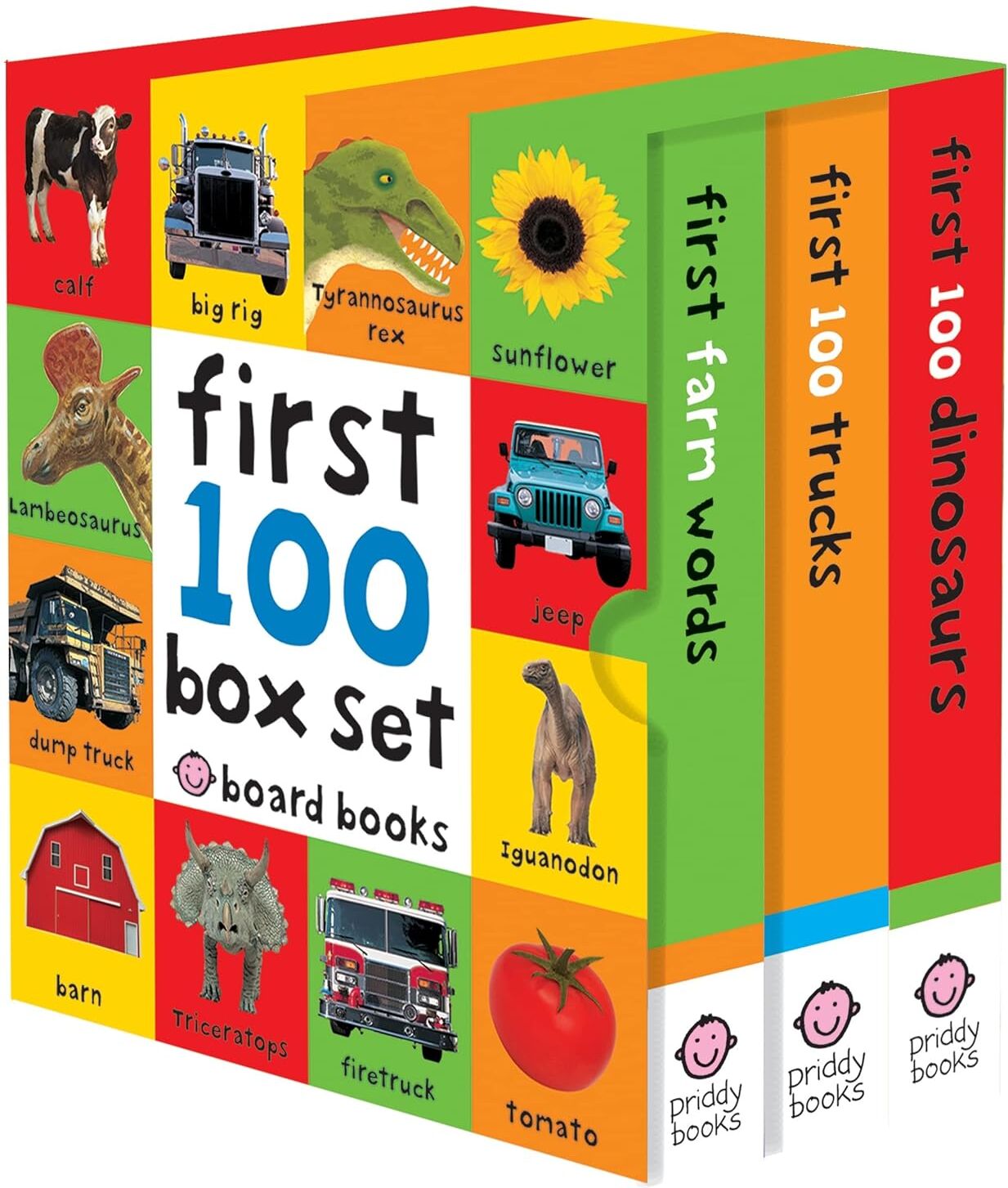
Priddy Books First 100 Box Set: Farm, Dino, Trucks by Roger Priddy - Board Book Set - Ages 0-5 - Early Learning Vocabulary BooksThe First 100 Box Set brings together three of Roger Priddy's bestselling early-learning titles in one sturdy slipcase. Featuring Farm, Dinosaurs, and Trucks, each board book uses bright photographic images and simple labelled words to build vocabulary. This compact and hard-wearing collection is ideal for little hands and makes a wonderful first library or gift set for any nursery shelf. Roger Priddy's First 100 series has become a firm favourite with parents and early-years educators thanks to its simple, effective approach to early word learning. Each of the three board books introduces 100 words through clear, vibrant photographs paired with bold, easy-to-read text. This set includes First Farm Words, First 100 Trucks, and First 100 Dinosaurs, all published by Priddy Books and suitable for children aged 0-5.8,49 £*Shipping: 2,99 £Secure redirect to the provider
-
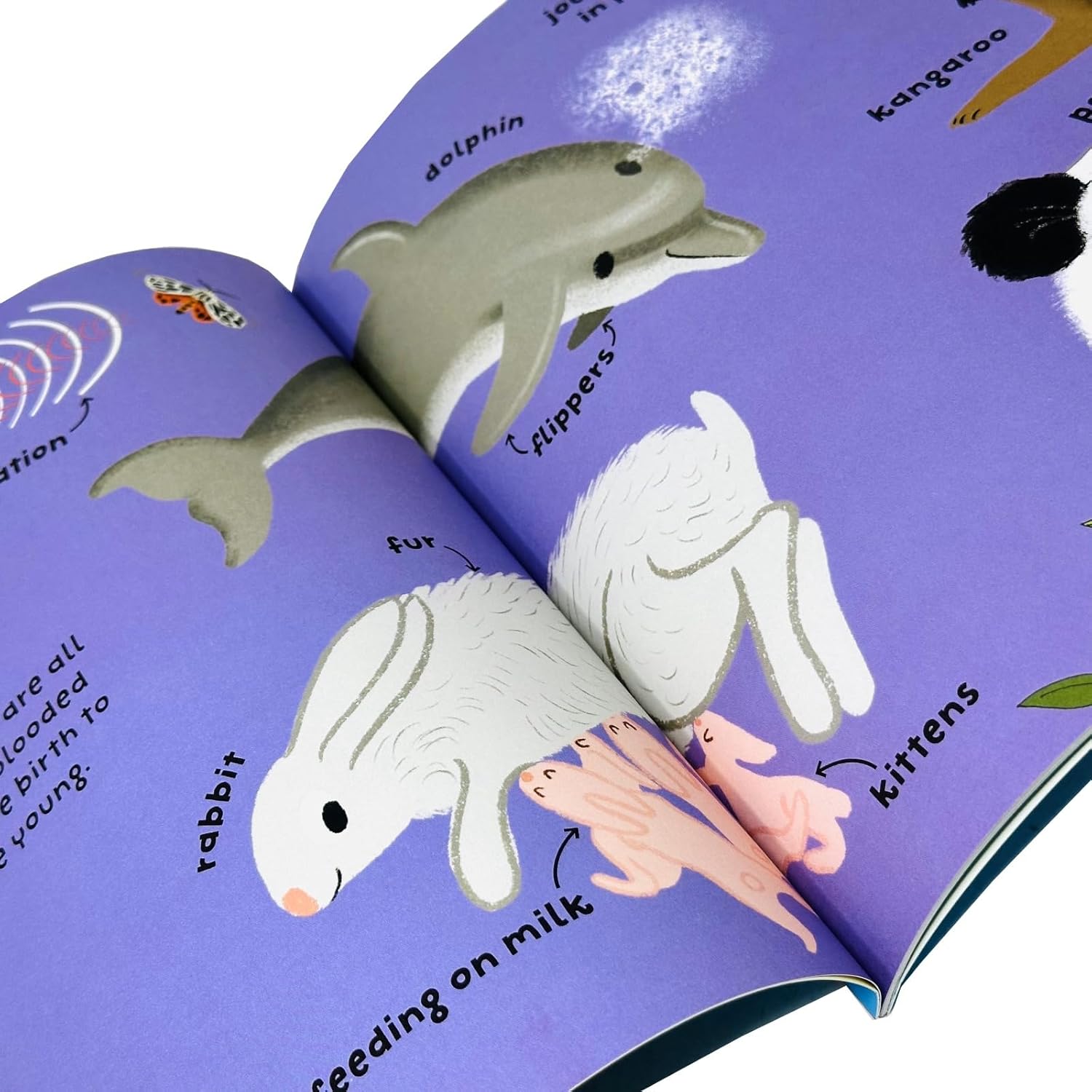
Miles Kelly Big Words for Little Experts 10 Books Collection Set by Fran Bromage - Paperback - Ages 2+ - Preschool Vocabulary & Learning Non-FictionGive your little learner a head start with the Big Words for Little Experts 10 Books Collection Set by Fran Bromage. This set of 10 paperback books, published by Miles Kelly, introduces preschoolers to exciting vocabulary across ten subjects, including animals, birds, the body, bugs, dinosaurs, habitats, mammals, oceans, our planet, and space. Each book takes a single subject and brings it to life through colourful illustrations paired with engaging text, boosting early language skills while sparking curiosity about the world.9,99 £*Shipping: 2,99 £Secure redirect to the provider
-
How can one convert a fraction into a hundredth fraction?
To convert a fraction into a hundredth fraction, you need to first find an equivalent fraction with a denominator of 100. To do this, multiply both the numerator and denominator of the original fraction by a number that will make the denominator 100 (e.g., if the original fraction is 1/4, multiply both the numerator and denominator by 25 to get 25/100). This will give you the fraction in hundredths. **
-
How can a fraction be converted into a hundredth fraction?
To convert a fraction into a hundredth fraction, you need to first find an equivalent fraction with a denominator of 100. To do this, you can multiply both the numerator and denominator of the original fraction by a number that will make the denominator 100. For example, if you have the fraction 3/4, you can multiply both the numerator and denominator by 25 to get 75/100. This is the fraction equivalent to 3/4 in hundredths. **
-
How can you convert a fraction into a hundredth fraction?
To convert a fraction into a hundredth fraction, you need to first make sure the denominator is 100. If the denominator is not already 100, you can multiply both the numerator and denominator by the same number to make the denominator 100. For example, if you have the fraction 1/4, you can multiply both the numerator and denominator by 25 to get 25/100, which is the hundredth fraction equivalent of 1/4. **
-
How does one convert from molar fraction to mass fraction?
To convert from molar fraction to mass fraction, you need to know the molar mass of each component in the mixture. First, calculate the mass of each component by multiplying its molar fraction by the total mass of the mixture. Then, divide the mass of each component by the total mass of the mixture to get the mass fraction. Finally, express the mass fraction as a percentage by multiplying by 100. **
* All prices are inclusive of VAT and, if applicable, plus shipping costs. The offer information is based on the details provided by the respective shop and is updated through automated processes. Real-time updates do not occur, so deviations can occur in individual cases. ** Note: Parts of this content were created by AI.