Buy deutschkurse.eu ?
We are moving the project
deutschkurse.eu .
Are you interested in purchasing the domain
deutschkurse.eu ?
domain@kv-gmbh.de · 0541-91531010
Buy deutschkurse.eu ?
Is the square axis-symmetric, but not point-symmetric?
Yes, a square is axis-symmetric, meaning it has rotational symmetry around its center axis. However, it is not point-symmetric, as it does not have reflectional symmetry across any point within the shape. This is because a square does not have a point that can be reflected across to create a matching image. **
Can a rational function be both axis-symmetric and point-symmetric?
No, a rational function cannot be both axis-symmetric and point-symmetric. If a rational function is axis-symmetric, it means that it is symmetric with respect to the y-axis, while point-symmetry would require symmetry with respect to the origin. These two types of symmetry are mutually exclusive, so a rational function cannot exhibit both types of symmetry simultaneously. **


Similar search terms for Symmetric
Top-Angebote
Products related to Symmetric:
-
United Radish Baby Learning Phone Toy With Music, Lights & Early Education Activities blueWake up your little ones curiosity with a fun and interactive baby learning phone designed to inspire early development through play. This adorable radishshaped toy combines engaging sounds, music, and colorful buttons to keep toddlers entertained...39,97 $*Shipping: 0,00 $Secure redirect to the provider
-
Spelling and Vocabulary practice activities for children ages 6-7 (Year 2). Perfect for Home Learning.: (Scholastic English Skills)Master spelling and vocabulary and build English skills This workbook supports children to develop their spelling and vocabulary skills through fun and engaging activities which will help motivate your child's learning and confidence. A progress chart is also included for children to colour in as chapters are completed, and an introduction chapter on how to use the book. Content is split into: Back to basics; New spellins work: consonants; Focus on vowel sound; Super suffixes; More suffixes; Homophones and tricky words; and Spelling words with apostrophes. Help children feel prepared, capable and ready to tackle new challenges at school. Use at home or in school. Quickly builds confidence through regular, achievable activities that encourage independent learning. Designed to complement the school curriculum, meaning children work at the right level, so nothing feels too hard or too easy. Includes extra notes and tips to reinforce skills.4,99 £*Shipping: 1,99 £Secure redirect to the provider
-
JoyToys Portable Kids Piano Toy Mini Electronic Keyboard For Montessori Music Learning & Early Education pinkUnleash your child's love for music with this Mini electronic keyboard designed for curious little hands. This compact musical toy encourages creativity, rhythm, and early learning while providing hours of engaging fun. Perfect for toddlers and...59,97 $*Shipping: 0,00 $Secure redirect to the provider
-
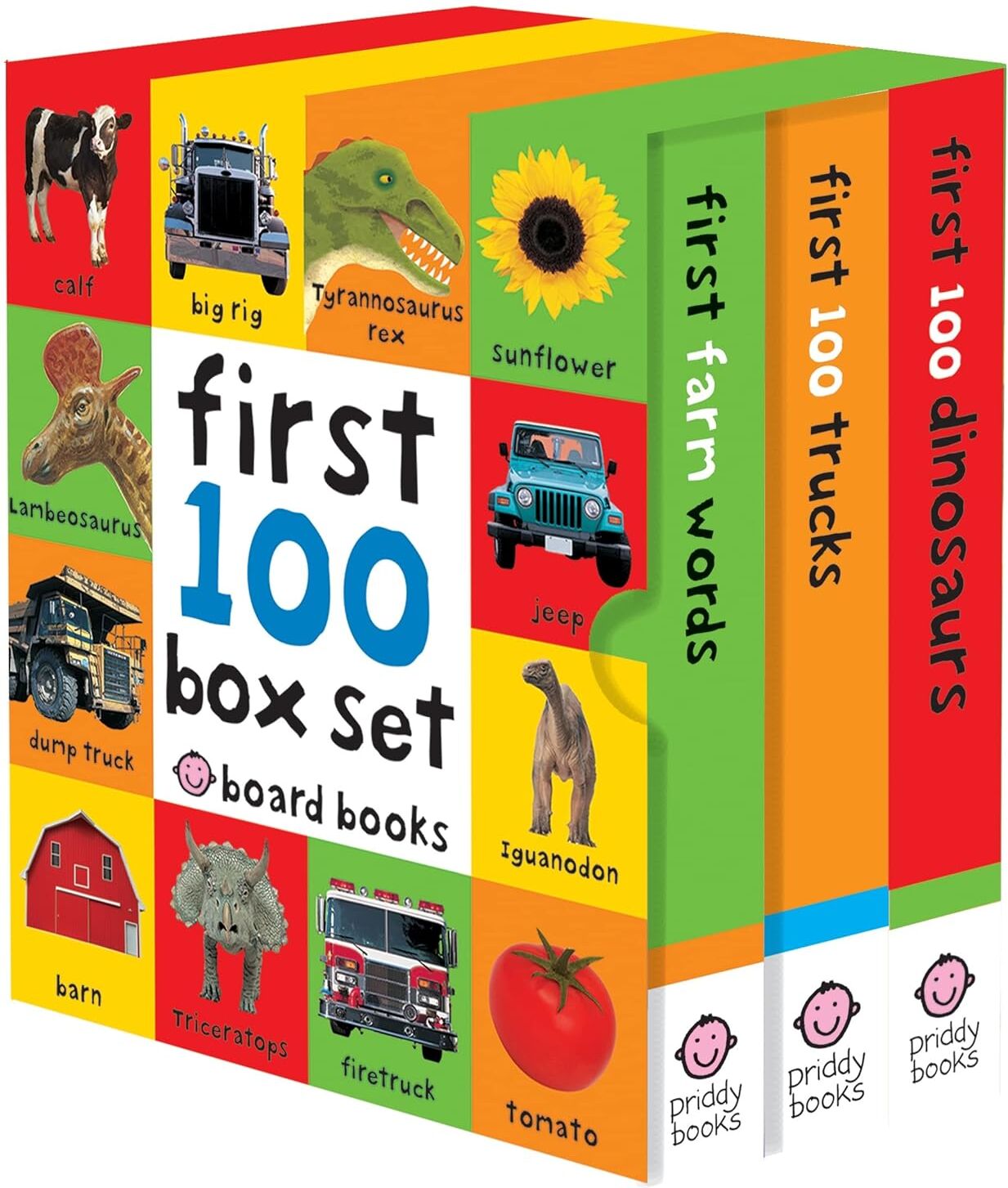
Priddy Books First 100 Box Set: Farm, Dino, Trucks by Roger Priddy - Board Book Set - Ages 0-5 - Early Learning Vocabulary BooksThe First 100 Box Set brings together three of Roger Priddy's bestselling early-learning titles in one sturdy slipcase. Featuring Farm, Dinosaurs, and Trucks, each board book uses bright photographic images and simple labelled words to build vocabulary. This compact and hard-wearing collection is ideal for little hands and makes a wonderful first library or gift set for any nursery shelf. Roger Priddy's First 100 series has become a firm favourite with parents and early-years educators thanks to its simple, effective approach to early word learning. Each of the three board books introduces 100 words through clear, vibrant photographs paired with bold, easy-to-read text. This set includes First Farm Words, First 100 Trucks, and First 100 Dinosaurs, all published by Priddy Books and suitable for children aged 0-5.8,49 £*Shipping: 2,99 £Secure redirect to the provider


-
Which capital and lowercase letters are rotationally symmetric and reflection symmetric?
The capital letters that are both rotationally symmetric and reflection symmetric are "I", "O", "S", "H", "X", and "Z". The lowercase letters that are both rotationally symmetric and reflection symmetric are "o" and "x". These letters look the same when rotated 180 degrees or when reflected across a vertical line. **
-
Can a polynomial function be both axis-symmetric and point-symmetric?
No, a polynomial function cannot be both axis-symmetric and point-symmetric. If a polynomial function is axis-symmetric, it means that it is symmetric with respect to the y-axis, while if it is point-symmetric, it means that it is symmetric with respect to the origin. These two types of symmetry are mutually exclusive, so a polynomial function cannot exhibit both types of symmetry simultaneously. **
-
Which uppercase and lowercase letters are rotationally symmetric and reflection symmetric?
The uppercase letters that are both rotationally symmetric and reflection symmetric are 'H', 'I', 'N', 'O', 'S', 'X', and 'Z'. The lowercase letters that are both rotationally symmetric and reflection symmetric are 'o' and 'x'. These letters look the same when rotated 180 degrees or when reflected across a vertical axis. **
-
Which capital letters of the alphabet are point symmetric and axis symmetric?
The capital letters of the alphabet that are point symmetric are A, H, I, M, O, T, U, V, W, X, and Y. These letters look the same when rotated 180 degrees around their center point. The capital letters that are axis symmetric are A, H, I, M, O, T, U, V, W, X, and Y. These letters look the same when reflected across a vertical axis. **
Which capital letters of the alphabet are point-symmetric and axis-symmetric?
The capital letters of the alphabet that are both point-symmetric and axis-symmetric are the letter "H" and the letter "I". These letters have vertical symmetry as well as symmetry when rotated 180 degrees. This means that they look the same when flipped vertically or rotated 180 degrees around their center point. **
Does "symmetric to the origin" always mean point symmetric in profile tasks?
No, "symmetric to the origin" does not always mean point symmetric in profile tasks. In profile tasks, "symmetric to the origin" means that the object is symmetric with respect to the origin of the coordinate system, which is the point (0,0). This means that if you reflect the object across the x-axis and the y-axis, it will look the same. Point symmetry, on the other hand, means that the object is symmetric with respect to a specific point, not necessarily the origin. Therefore, while point symmetry implies symmetry to the origin, symmetry to the origin does not always imply point symmetry in profile tasks. **
Top-Angebote
Products related to Symmetric:
-
Learning Resources Scramboozle Educational Game for Kids - Ages 6+ - Encourages Critical Thinking and Boosts Vocabulary SkillsIntroduce your little ones to the exciting world of learning with the Learning Resources Scramboozle Educational Game for Kids. This engaging game is designed to make learning fun while enhancing essential skills such as critical thinking, vocabulary, and teamwork. With its colorful cards and playful design, Scramboozle stimulates imagination and encourages interactive play. Perfect for family game nights or friendly competitions, Scramboozle invites children to decode silly words and race against the clock. It’s a delightful game that can be enjoyed by children aged 6 and up. Whether it's a gift for a birthday or a classroom resource, Scramboozle makes learning an enjoyable experience. It encourages critical thinking and boosts vocabulary skills with its colorful and engaging design.8,44 £*Shipping: 3,95 £Secure redirect to the provider
-
United Radish Baby Learning Phone Toy With Music, Lights & Early Education Activities blueWake up your little ones curiosity with a fun and interactive baby learning phone designed to inspire early development through play. This adorable radishshaped toy combines engaging sounds, music, and colorful buttons to keep toddlers entertained...39,97 $*Shipping: 0,00 $Secure redirect to the provider
-
Spelling and Vocabulary practice activities for children ages 6-7 (Year 2). Perfect for Home Learning.: (Scholastic English Skills)Master spelling and vocabulary and build English skills This workbook supports children to develop their spelling and vocabulary skills through fun and engaging activities which will help motivate your child's learning and confidence. A progress chart is also included for children to colour in as chapters are completed, and an introduction chapter on how to use the book. Content is split into: Back to basics; New spellins work: consonants; Focus on vowel sound; Super suffixes; More suffixes; Homophones and tricky words; and Spelling words with apostrophes. Help children feel prepared, capable and ready to tackle new challenges at school. Use at home or in school. Quickly builds confidence through regular, achievable activities that encourage independent learning. Designed to complement the school curriculum, meaning children work at the right level, so nothing feels too hard or too easy. Includes extra notes and tips to reinforce skills.4,99 £*Shipping: 1,99 £Secure redirect to the provider
-
Is the square axis-symmetric, but not point-symmetric?
Yes, a square is axis-symmetric, meaning it has rotational symmetry around its center axis. However, it is not point-symmetric, as it does not have reflectional symmetry across any point within the shape. This is because a square does not have a point that can be reflected across to create a matching image. **
-
Can a rational function be both axis-symmetric and point-symmetric?
No, a rational function cannot be both axis-symmetric and point-symmetric. If a rational function is axis-symmetric, it means that it is symmetric with respect to the y-axis, while point-symmetry would require symmetry with respect to the origin. These two types of symmetry are mutually exclusive, so a rational function cannot exhibit both types of symmetry simultaneously. **
-
Which capital and lowercase letters are rotationally symmetric and reflection symmetric?
The capital letters that are both rotationally symmetric and reflection symmetric are "I", "O", "S", "H", "X", and "Z". The lowercase letters that are both rotationally symmetric and reflection symmetric are "o" and "x". These letters look the same when rotated 180 degrees or when reflected across a vertical line. **
-
Can a polynomial function be both axis-symmetric and point-symmetric?
No, a polynomial function cannot be both axis-symmetric and point-symmetric. If a polynomial function is axis-symmetric, it means that it is symmetric with respect to the y-axis, while if it is point-symmetric, it means that it is symmetric with respect to the origin. These two types of symmetry are mutually exclusive, so a polynomial function cannot exhibit both types of symmetry simultaneously. **
Similar search terms for Symmetric
-
JoyToys Portable Kids Piano Toy Mini Electronic Keyboard For Montessori Music Learning & Early Education pinkUnleash your child's love for music with this Mini electronic keyboard designed for curious little hands. This compact musical toy encourages creativity, rhythm, and early learning while providing hours of engaging fun. Perfect for toddlers and...59,97 $*Shipping: 0,00 $Secure redirect to the provider
-
Priddy Books First 100 Box Set: Farm, Dino, Trucks by Roger Priddy - Board Book Set - Ages 0-5 - Early Learning Vocabulary BooksThe First 100 Box Set brings together three of Roger Priddy's bestselling early-learning titles in one sturdy slipcase. Featuring Farm, Dinosaurs, and Trucks, each board book uses bright photographic images and simple labelled words to build vocabulary. This compact and hard-wearing collection is ideal for little hands and makes a wonderful first library or gift set for any nursery shelf. Roger Priddy's First 100 series has become a firm favourite with parents and early-years educators thanks to its simple, effective approach to early word learning. Each of the three board books introduces 100 words through clear, vibrant photographs paired with bold, easy-to-read text. This set includes First Farm Words, First 100 Trucks, and First 100 Dinosaurs, all published by Priddy Books and suitable for children aged 0-5.8,49 £*Shipping: 2,99 £Secure redirect to the provider
-
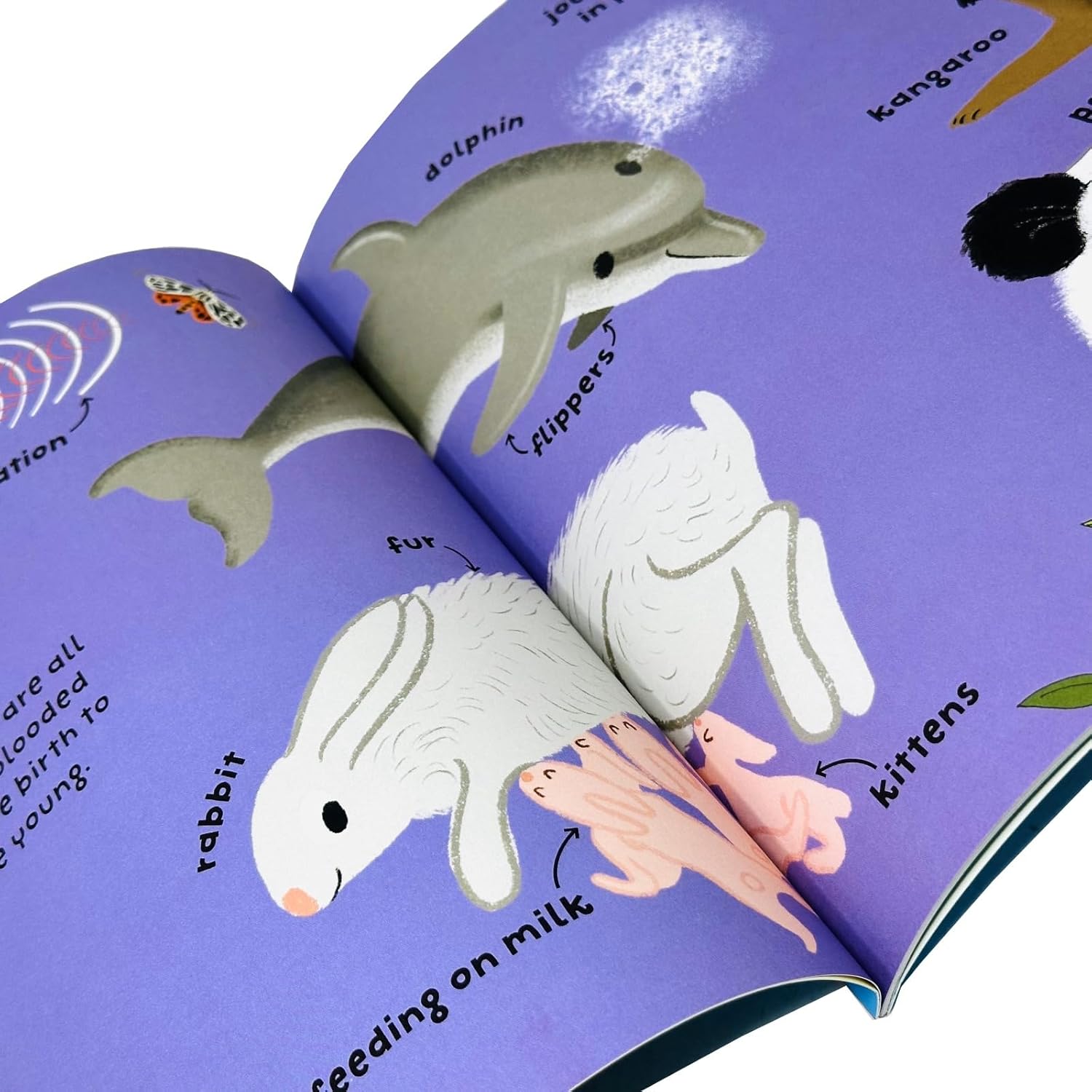
Miles Kelly Big Words for Little Experts 10 Books Collection Set by Fran Bromage - Paperback - Ages 2+ - Preschool Vocabulary & Learning Non-FictionGive your little learner a head start with the Big Words for Little Experts 10 Books Collection Set by Fran Bromage. This set of 10 paperback books, published by Miles Kelly, introduces preschoolers to exciting vocabulary across ten subjects, including animals, birds, the body, bugs, dinosaurs, habitats, mammals, oceans, our planet, and space. Each book takes a single subject and brings it to life through colourful illustrations paired with engaging text, boosting early language skills while sparking curiosity about the world.9,99 £*Shipping: 2,99 £Secure redirect to the provider
-
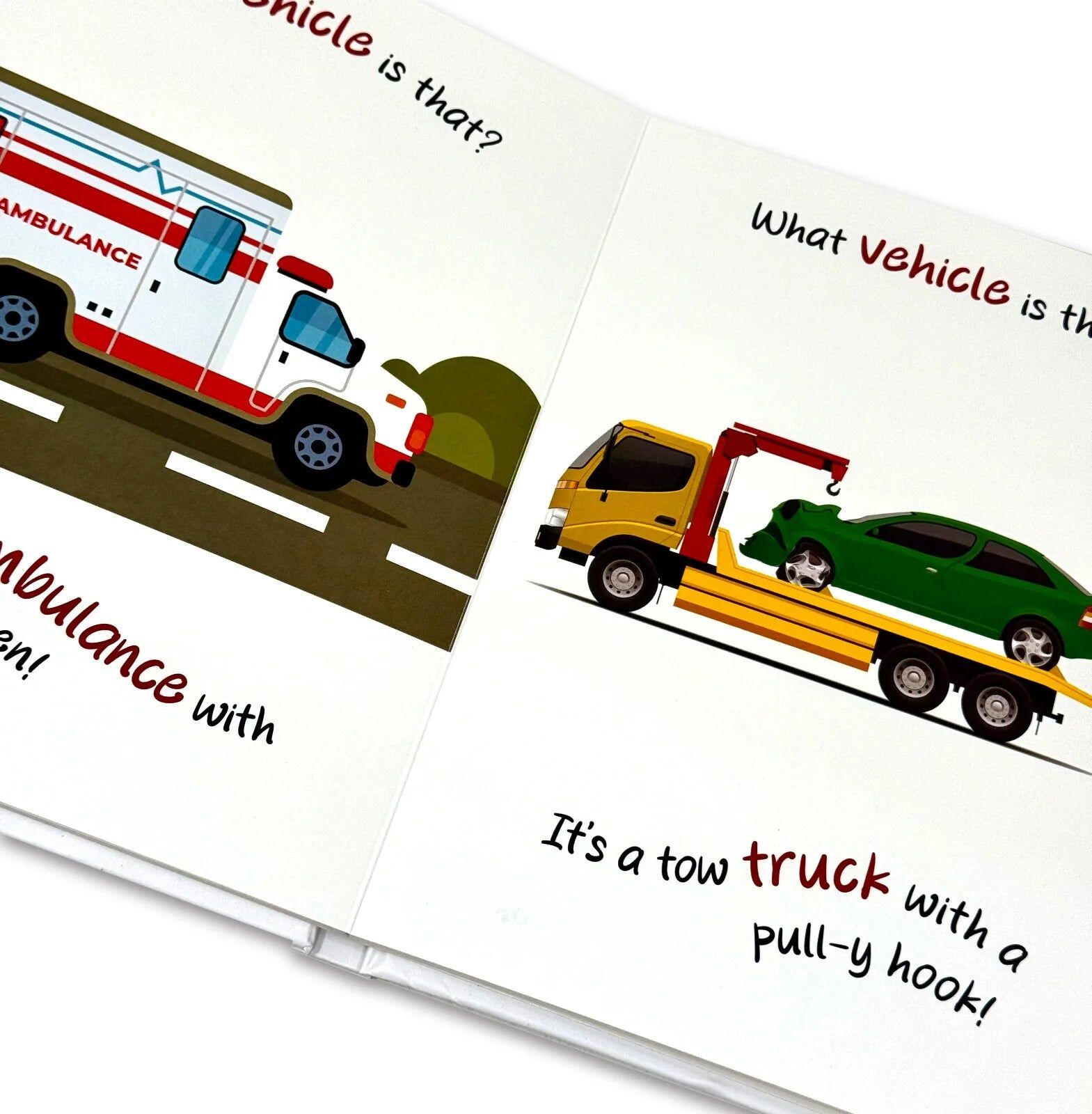
Rupa Publications India What Vehicle Is That? by Moonstone - Early Learning Board Book for Toddlers - Ages 0-2 - Vehicle Names & Vocabulary BuildingWhat Vehicle Is That? is a brightly illustrated board book from Moonstone, introducing young readers to the world of transport. Built for tiny hands, it pairs bold, simple pictures with familiar vehicle names, turning everyday journeys and playtime into early word recognition. The durable board pages can withstand repeated flipping, chewing, and curious little fingers, making this a dependable addition to any nursery bookshelf or baby bag. Toddlers are naturally drawn to things that move, and What Vehicle Is That? taps into that fascination. Each sturdy spread focuses on a different vehicle, from cars and buses to trucks and emergency vehicles, presenting one clear image alongside its name so babies and toddlers can start matching words to pictures. The simple, uncluttered layout is intentional: at this age, children benefit from clear and concise information.2,99 £*Shipping: 2,99 £Secure redirect to the provider
-
Which uppercase and lowercase letters are rotationally symmetric and reflection symmetric?
The uppercase letters that are both rotationally symmetric and reflection symmetric are 'H', 'I', 'N', 'O', 'S', 'X', and 'Z'. The lowercase letters that are both rotationally symmetric and reflection symmetric are 'o' and 'x'. These letters look the same when rotated 180 degrees or when reflected across a vertical axis. **
-
Which capital letters of the alphabet are point symmetric and axis symmetric?
The capital letters of the alphabet that are point symmetric are A, H, I, M, O, T, U, V, W, X, and Y. These letters look the same when rotated 180 degrees around their center point. The capital letters that are axis symmetric are A, H, I, M, O, T, U, V, W, X, and Y. These letters look the same when reflected across a vertical axis. **
-
Which capital letters of the alphabet are point-symmetric and axis-symmetric?
The capital letters of the alphabet that are both point-symmetric and axis-symmetric are the letter "H" and the letter "I". These letters have vertical symmetry as well as symmetry when rotated 180 degrees. This means that they look the same when flipped vertically or rotated 180 degrees around their center point. **
-
Does "symmetric to the origin" always mean point symmetric in profile tasks?
No, "symmetric to the origin" does not always mean point symmetric in profile tasks. In profile tasks, "symmetric to the origin" means that the object is symmetric with respect to the origin of the coordinate system, which is the point (0,0). This means that if you reflect the object across the x-axis and the y-axis, it will look the same. Point symmetry, on the other hand, means that the object is symmetric with respect to a specific point, not necessarily the origin. Therefore, while point symmetry implies symmetry to the origin, symmetry to the origin does not always imply point symmetry in profile tasks. **
* All prices are inclusive of VAT and, if applicable, plus shipping costs. The offer information is based on the details provided by the respective shop and is updated through automated processes. Real-time updates do not occur, so deviations can occur in individual cases. ** Note: Parts of this content were created by AI.