Buy deutschkurse.eu ?
We are moving the project
deutschkurse.eu .
Are you interested in purchasing the domain
deutschkurse.eu ?
domain@kv-gmbh.de · 0541-91531010
Buy deutschkurse.eu ?
Is anticipation excitement?
Anticipation can lead to excitement, but they are not the same thing. Anticipation is the feeling of looking forward to something, while excitement is the intense feeling of enthusiasm or eagerness. Anticipation can build excitement as you await a desired event or outcome, but excitement is the heightened emotional state that comes with the actual experience or realization of that anticipation. **
Was my excitement okay?
Your excitement is completely okay! It's natural to feel excited about something that you are passionate about or that brings you joy. Expressing your excitement can also be contagious and bring positivity to those around you. As long as your excitement is not causing harm to yourself or others, it is perfectly fine to embrace and express it. Keep enjoying the things that bring you excitement and happiness! **


Similar search terms for Excitement
Top-Angebote
Products related to Excitement:
-
Collins Easy Learning English Grammar And Punctuation 1 By Collins Education - Non Fiction - PaperbackTitle:. Collins Easy Learning English Grammar And Punctuation 1 Format: Paperback Overview:. The Collins Easy Learning English Grammar And Punctuation 1 delivers a focused, highly practical introduction to the foundational rules that govern effective written English. Published by Collins Education, this volume serves as the first entry in a widely respected instructional series designed to break down complex linguistic concepts into manageable, easy-to-follow lessons. Rather than presenting dense theoretical lectures, the book adopts a structured, activity-driven approach that guides readers through essential grammar topics, punctuation conventions, clause construction, and common syntactical patterns. Each chapter pairs clear explanations with targeted exercises that reinforce understanding through immediate application. The layout prioritises readability, using spacious margins, defined headings, and visual cues that make self-directed study straightforward. Whether you are preparing for formal assessments, rebuilding foundational literacy skills after years away from academia, or simply aiming to eliminate recurring errors in everyday documents, this guide provides a reliable pathway to clearer, more confident writing. By combining curriculum-aligned content with proven pedagogy, the book bridges the gap between passive reading and active mastery, ensuring that every lesson translates directly into improved communication habits outside the page. What Makes This Book Stand Out:. Unlike traditional grammar textbooks that overwhelm readers with exhaustive terminology and rigid formatting, this volume thrives on accessibility and progressive skill building. The standout feature is its deliberate pacing: each rule is introduced through a concise explanation, immediately followed by contextual examples that mirror real-world usage. Practice tasks are embedded throughout rather than quarantined at the end, allowing readers to test comprehension in the moment and receive structured feedback loops. The editorial design intentionally avoids decorative clutter, keeping attention fixed on syntax, punctuation marks, sentence boundaries, and error correction strategies. Every chapter concludes with review checkpoints that help learners identify weak spots before advancing, creating a cumulative mastery model instead of fragmented studying. The paperback format remains deliberately compact without sacrificing depth, striking a balance between portability and comprehensive coverage. This combination of cognitive scaffolding, clear typographic hierarchy, and purposeful exercise sequencing transforms what could easily feel mechanical into an engaging, results-oriented study tool. It respects the reader’s time, acknowledges typical stumbling blocks, and replaces confusion with repeatable frameworks that stick. Who This Book Is Perfect For:. This resource is ideally suited for secondary school students navigating National Curriculum expectations, particularly...7,99 £*Shipping: 2,99 £Secure redirect to the provider
-
Spelling and Vocabulary practice activities for children ages 6-7 (Year 2). Perfect for Home Learning.: (Scholastic English Skills)Master spelling and vocabulary and build English skills This workbook supports children to develop their spelling and vocabulary skills through fun and engaging activities which will help motivate your child's learning and confidence. A progress chart is also included for children to colour in as chapters are completed, and an introduction chapter on how to use the book. Content is split into: Back to basics; New spellins work: consonants; Focus on vowel sound; Super suffixes; More suffixes; Homophones and tricky words; and Spelling words with apostrophes. Help children feel prepared, capable and ready to tackle new challenges at school. Use at home or in school. Quickly builds confidence through regular, achievable activities that encourage independent learning. Designed to complement the school curriculum, meaning children work at the right level, so nothing feels too hard or too easy. Includes extra notes and tips to reinforce skills.4,99 £*Shipping: 1,99 £Secure redirect to the provider
-
JoyToys Portable Kids Piano Toy Mini Electronic Keyboard For Montessori Music Learning & Early Education greenUnleash your child's love for music with this Mini electronic keyboard designed for curious little hands. This compact musical toy encourages creativity, rhythm, and early learning while providing hours of engaging fun. Perfect for toddlers and...59,97 $*Shipping: 0,00 $Secure redirect to the provider
-
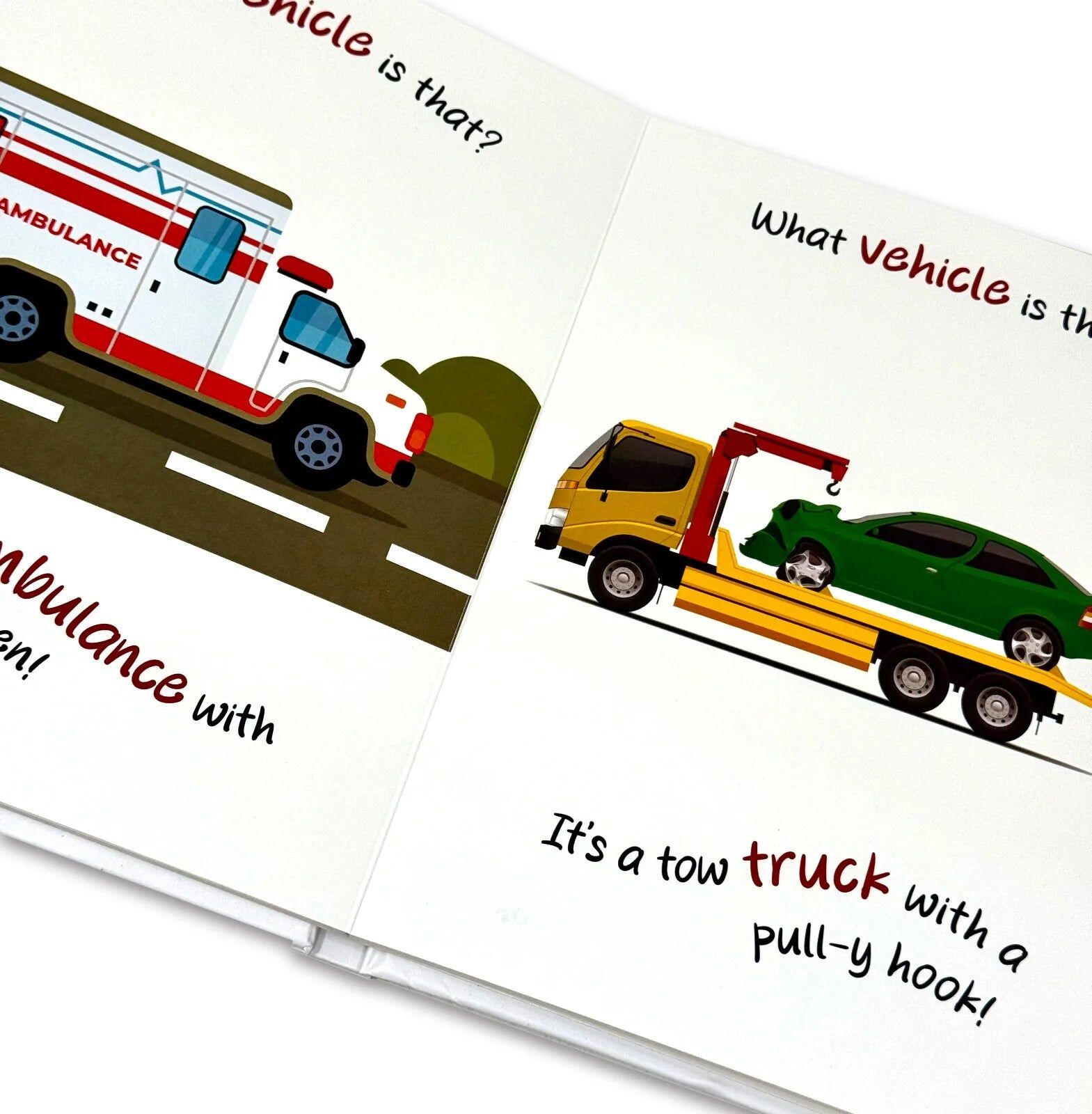
Rupa Publications India What Vehicle Is That? by Moonstone - Early Learning Board Book for Toddlers - Ages 0-2 - Vehicle Names & Vocabulary BuildingWhat Vehicle Is That? is a brightly illustrated board book from Moonstone, introducing young readers to the world of transport. Built for tiny hands, it pairs bold, simple pictures with familiar vehicle names, turning everyday journeys and playtime into early word recognition. The durable board pages can withstand repeated flipping, chewing, and curious little fingers, making this a dependable addition to any nursery bookshelf or baby bag. Toddlers are naturally drawn to things that move, and What Vehicle Is That? taps into that fascination. Each sturdy spread focuses on a different vehicle, from cars and buses to trucks and emergency vehicles, presenting one clear image alongside its name so babies and toddlers can start matching words to pictures. The simple, uncluttered layout is intentional: at this age, children benefit from clear and concise information.2,99 £*Shipping: 2,99 £Secure redirect to the provider


-
What causes excitement during sleep?
Excitement during sleep can be caused by a variety of factors, such as intense dreams or nightmares, sleep disorders like sleep terrors or sleepwalking, or even physiological responses to stress or anxiety. Intense dreams or nightmares can trigger excitement during sleep, leading to physical reactions such as increased heart rate or sweating. Sleep disorders like sleep terrors or sleepwalking can also cause excitement as the individual may experience intense emotions or engage in physical activity while still asleep. Additionally, stress or anxiety can manifest during sleep, leading to excitement or restlessness. **
-
How can one recognize excitement?
Excitement can be recognized through physical and emotional cues. Physically, excitement may manifest as increased heart rate, rapid breathing, and heightened energy levels. Emotionally, excitement can be recognized through feelings of anticipation, enthusiasm, and a sense of being fully engaged in the present moment. Additionally, excited individuals may exhibit behaviors such as smiling, talking quickly, or expressing a desire to take action. Overall, recognizing excitement involves paying attention to both the physical and emotional signals that indicate a heightened state of arousal and positive anticipation. **
-
What causes excitement in love?
Excitement in love can be caused by a variety of factors, such as the thrill of getting to know someone new, the anticipation of spending time together, and the emotional connection that comes with deepening a relationship. Shared experiences, surprises, and the feeling of being desired can also contribute to the excitement in love. Additionally, the unknown and the potential for growth and change within the relationship can create a sense of excitement and adventure. **
-
What does fear excitement resting mean?
Fear excitement resting refers to the feeling of being simultaneously afraid and excited, but also finding a sense of calm and peace in the midst of those conflicting emotions. It's the experience of feeling both anxious and eager about something, yet finding a moment of stillness and relaxation within that emotional whirlwind. It's a complex mix of emotions that can be both overwhelming and invigorating at the same time. **


Is excitement bad for the heart?
While excitement can temporarily increase heart rate and blood pressure, it is not necessarily bad for the heart. In fact, experiencing excitement in moderation can be beneficial for overall well-being as it can boost mood and energy levels. However, excessive or chronic excitement that leads to prolonged stress or anxiety can have negative effects on the heart and overall health. It is important to find a balance and practice stress management techniques to maintain a healthy heart. **
Why do we tremble with excitement?
We tremble with excitement due to the release of adrenaline in our bodies. This hormone is produced in response to a thrilling or exhilarating experience, causing our heart rate to increase and our muscles to tense up. The physical sensation of trembling is a natural reaction to the heightened emotional state we are experiencing, signaling our body's readiness for action. This trembling can be a mix of nervousness, anticipation, and exhilaration, all contributing to the overall feeling of excitement. **
Top-Angebote
Products related to Excitement:
-
Learning Resources Scramboozle Educational Game for Kids - Ages 6+ - Encourages Critical Thinking and Boosts Vocabulary SkillsIntroduce your little ones to the exciting world of learning with the Learning Resources Scramboozle Educational Game for Kids. This engaging game is designed to make learning fun while enhancing essential skills such as critical thinking, vocabulary, and teamwork. With its colorful cards and playful design, Scramboozle stimulates imagination and encourages interactive play. Perfect for family game nights or friendly competitions, Scramboozle invites children to decode silly words and race against the clock. It’s a delightful game that can be enjoyed by children aged 6 and up. Whether it's a gift for a birthday or a classroom resource, Scramboozle makes learning an enjoyable experience. It encourages critical thinking and boosts vocabulary skills with its colorful and engaging design.8,99 £*Shipping: 3,95 £Secure redirect to the provider
-
United Radish Baby Learning Phone Toy With Music, Lights & Early Education Activities blueWake up your little ones curiosity with a fun and interactive baby learning phone designed to inspire early development through play. This adorable radishshaped toy combines engaging sounds, music, and colorful buttons to keep toddlers entertained...39,97 $*Shipping: 0,00 $Secure redirect to the provider
-
Collins Easy Learning English Grammar And Punctuation 1 By Collins Education - Non Fiction - PaperbackTitle:. Collins Easy Learning English Grammar And Punctuation 1 Format: Paperback Overview:. The Collins Easy Learning English Grammar And Punctuation 1 delivers a focused, highly practical introduction to the foundational rules that govern effective written English. Published by Collins Education, this volume serves as the first entry in a widely respected instructional series designed to break down complex linguistic concepts into manageable, easy-to-follow lessons. Rather than presenting dense theoretical lectures, the book adopts a structured, activity-driven approach that guides readers through essential grammar topics, punctuation conventions, clause construction, and common syntactical patterns. Each chapter pairs clear explanations with targeted exercises that reinforce understanding through immediate application. The layout prioritises readability, using spacious margins, defined headings, and visual cues that make self-directed study straightforward. Whether you are preparing for formal assessments, rebuilding foundational literacy skills after years away from academia, or simply aiming to eliminate recurring errors in everyday documents, this guide provides a reliable pathway to clearer, more confident writing. By combining curriculum-aligned content with proven pedagogy, the book bridges the gap between passive reading and active mastery, ensuring that every lesson translates directly into improved communication habits outside the page. What Makes This Book Stand Out:. Unlike traditional grammar textbooks that overwhelm readers with exhaustive terminology and rigid formatting, this volume thrives on accessibility and progressive skill building. The standout feature is its deliberate pacing: each rule is introduced through a concise explanation, immediately followed by contextual examples that mirror real-world usage. Practice tasks are embedded throughout rather than quarantined at the end, allowing readers to test comprehension in the moment and receive structured feedback loops. The editorial design intentionally avoids decorative clutter, keeping attention fixed on syntax, punctuation marks, sentence boundaries, and error correction strategies. Every chapter concludes with review checkpoints that help learners identify weak spots before advancing, creating a cumulative mastery model instead of fragmented studying. The paperback format remains deliberately compact without sacrificing depth, striking a balance between portability and comprehensive coverage. This combination of cognitive scaffolding, clear typographic hierarchy, and purposeful exercise sequencing transforms what could easily feel mechanical into an engaging, results-oriented study tool. It respects the reader’s time, acknowledges typical stumbling blocks, and replaces confusion with repeatable frameworks that stick. Who This Book Is Perfect For:. This resource is ideally suited for secondary school students navigating National Curriculum expectations, particularly...7,99 £*Shipping: 2,99 £Secure redirect to the provider
-
Spelling and Vocabulary practice activities for children ages 6-7 (Year 2). Perfect for Home Learning.: (Scholastic English Skills)Master spelling and vocabulary and build English skills This workbook supports children to develop their spelling and vocabulary skills through fun and engaging activities which will help motivate your child's learning and confidence. A progress chart is also included for children to colour in as chapters are completed, and an introduction chapter on how to use the book. Content is split into: Back to basics; New spellins work: consonants; Focus on vowel sound; Super suffixes; More suffixes; Homophones and tricky words; and Spelling words with apostrophes. Help children feel prepared, capable and ready to tackle new challenges at school. Use at home or in school. Quickly builds confidence through regular, achievable activities that encourage independent learning. Designed to complement the school curriculum, meaning children work at the right level, so nothing feels too hard or too easy. Includes extra notes and tips to reinforce skills.4,99 £*Shipping: 1,99 £Secure redirect to the provider
-
Is anticipation excitement?
Anticipation can lead to excitement, but they are not the same thing. Anticipation is the feeling of looking forward to something, while excitement is the intense feeling of enthusiasm or eagerness. Anticipation can build excitement as you await a desired event or outcome, but excitement is the heightened emotional state that comes with the actual experience or realization of that anticipation. **
-
Was my excitement okay?
Your excitement is completely okay! It's natural to feel excited about something that you are passionate about or that brings you joy. Expressing your excitement can also be contagious and bring positivity to those around you. As long as your excitement is not causing harm to yourself or others, it is perfectly fine to embrace and express it. Keep enjoying the things that bring you excitement and happiness! **
-
What causes excitement during sleep?
Excitement during sleep can be caused by a variety of factors, such as intense dreams or nightmares, sleep disorders like sleep terrors or sleepwalking, or even physiological responses to stress or anxiety. Intense dreams or nightmares can trigger excitement during sleep, leading to physical reactions such as increased heart rate or sweating. Sleep disorders like sleep terrors or sleepwalking can also cause excitement as the individual may experience intense emotions or engage in physical activity while still asleep. Additionally, stress or anxiety can manifest during sleep, leading to excitement or restlessness. **
-
How can one recognize excitement?
Excitement can be recognized through physical and emotional cues. Physically, excitement may manifest as increased heart rate, rapid breathing, and heightened energy levels. Emotionally, excitement can be recognized through feelings of anticipation, enthusiasm, and a sense of being fully engaged in the present moment. Additionally, excited individuals may exhibit behaviors such as smiling, talking quickly, or expressing a desire to take action. Overall, recognizing excitement involves paying attention to both the physical and emotional signals that indicate a heightened state of arousal and positive anticipation. **
Similar search terms for Excitement
-
JoyToys Portable Kids Piano Toy Mini Electronic Keyboard For Montessori Music Learning & Early Education greenUnleash your child's love for music with this Mini electronic keyboard designed for curious little hands. This compact musical toy encourages creativity, rhythm, and early learning while providing hours of engaging fun. Perfect for toddlers and...59,97 $*Shipping: 0,00 $Secure redirect to the provider
-
Rupa Publications India What Vehicle Is That? by Moonstone - Early Learning Board Book for Toddlers - Ages 0-2 - Vehicle Names & Vocabulary BuildingWhat Vehicle Is That? is a brightly illustrated board book from Moonstone, introducing young readers to the world of transport. Built for tiny hands, it pairs bold, simple pictures with familiar vehicle names, turning everyday journeys and playtime into early word recognition. The durable board pages can withstand repeated flipping, chewing, and curious little fingers, making this a dependable addition to any nursery bookshelf or baby bag. Toddlers are naturally drawn to things that move, and What Vehicle Is That? taps into that fascination. Each sturdy spread focuses on a different vehicle, from cars and buses to trucks and emergency vehicles, presenting one clear image alongside its name so babies and toddlers can start matching words to pictures. The simple, uncluttered layout is intentional: at this age, children benefit from clear and concise information.2,99 £*Shipping: 2,99 £Secure redirect to the provider
-
Igloo Books Ltd English Basics 8-9 Curriculum Series Workbook Set - Education & Learning Resources - Paperback For Primary SchoolTitles in This Set:. English Basics 8-9 Curriculum Series Workbook Set Format: Paperback. Age Suitability: 8–9 Years / Primary School Overview:. The English Basics 8-9 Curriculum Series Workbook Set offers a structured, comprehensive approach to mastering essential language skills for primary school students. Designed specifically for learners in the 8 to 9-year-old age bracket, this paperback set aligns with key educational milestones, supporting children as they transition from basic decoding to fluid reading and confident writing. By combining targeted exercises with clear progression, the set reinforces classroom teaching while providing valuable opportunities for independent practice at home. Each workbook focuses on refining the core components of the English curriculum, ensuring students build a solid foundation before taking on more complex literacy challenges. Ideal for educators, tutors, and parents seeking reliable supplementary resources, this collection delivers consistent, curriculum-supported practice that encourages steady academic growth. What Makes This Collection Special:. At ages 8 to 9, young readers encounter significant shifts in vocabulary, sentence structure, and grammatical application. This workbook set addresses those developmental changes by offering carefully sequenced tasks that scaffold learning effectively. Unlike disjointed practice sheets, this series maintains a cohesive educational flow, connecting spelling, grammar, punctuation, and comprehension through engaging themes that resonate with primary learners. The paperback format ensures portability and ease of use, allowing students to work through exercises in class, during homework sessions, or on family outings. Furthermore, the series prioritises active engagement, prompting critical thinking alongside mechanical skill-building. By using this set, learners gain confidence in their abilities, reducing anxiety around English assessments while developing habits that support long-term academic success across all subjects. Books Included in This Collection:. English Basics Core Skills Workbook(s). This component introduces focused practice on the fundamental elements of English for the 8–9 year level. Exercises guide students through essential grammar rules, including subject-verb agreement, verb tenses, and descriptive adjectives. Key spelling patterns relevant to this age group are reinforced through repetition and contextual application. Readers also encounter short comprehension passages that require retrieval of information, inference, and summary skills. The layout encourages neat handwriting and attention to detail, helping pupils develop polished written expression. Regular review prompts allow learners to track progress and identify areas requiring further attention, making this a vital tool for consolidating baseline literacy competence required for upper primary education.. Application and Fluency Workbook(s). Building upon core mechanics, this...3,99 £*Shipping: 2,99 £Secure redirect to the provider
-
Fusion Finds Touch And Feel Babies Book, Funny Sensory Tails Book For Early Education Creative Toddler Interactive Learning Toy oceanEngage & Educate with Interactive Sensory PlayGive your child the gift of handson learning with our touch and feel babies book! Designed for funny sensory babies books, this early education toy features playful animal tails that spark curiosity and...27,97 $*Shipping: 0,00 $Secure redirect to the provider
-
What causes excitement in love?
Excitement in love can be caused by a variety of factors, such as the thrill of getting to know someone new, the anticipation of spending time together, and the emotional connection that comes with deepening a relationship. Shared experiences, surprises, and the feeling of being desired can also contribute to the excitement in love. Additionally, the unknown and the potential for growth and change within the relationship can create a sense of excitement and adventure. **
-
What does fear excitement resting mean?
Fear excitement resting refers to the feeling of being simultaneously afraid and excited, but also finding a sense of calm and peace in the midst of those conflicting emotions. It's the experience of feeling both anxious and eager about something, yet finding a moment of stillness and relaxation within that emotional whirlwind. It's a complex mix of emotions that can be both overwhelming and invigorating at the same time. **
-
Is excitement bad for the heart?
While excitement can temporarily increase heart rate and blood pressure, it is not necessarily bad for the heart. In fact, experiencing excitement in moderation can be beneficial for overall well-being as it can boost mood and energy levels. However, excessive or chronic excitement that leads to prolonged stress or anxiety can have negative effects on the heart and overall health. It is important to find a balance and practice stress management techniques to maintain a healthy heart. **
-
Why do we tremble with excitement?
We tremble with excitement due to the release of adrenaline in our bodies. This hormone is produced in response to a thrilling or exhilarating experience, causing our heart rate to increase and our muscles to tense up. The physical sensation of trembling is a natural reaction to the heightened emotional state we are experiencing, signaling our body's readiness for action. This trembling can be a mix of nervousness, anticipation, and exhilaration, all contributing to the overall feeling of excitement. **
* All prices are inclusive of VAT and, if applicable, plus shipping costs. The offer information is based on the details provided by the respective shop and is updated through automated processes. Real-time updates do not occur, so deviations can occur in individual cases. ** Note: Parts of this content were created by AI.